Why our mangoes won't grow in Jaipur
Mango survives in Rajasthan, but it doesn't thrive. Here's how we decide which crop belongs on which farm, and why we'd rather grow each one where its climate is a native fit.
On this page
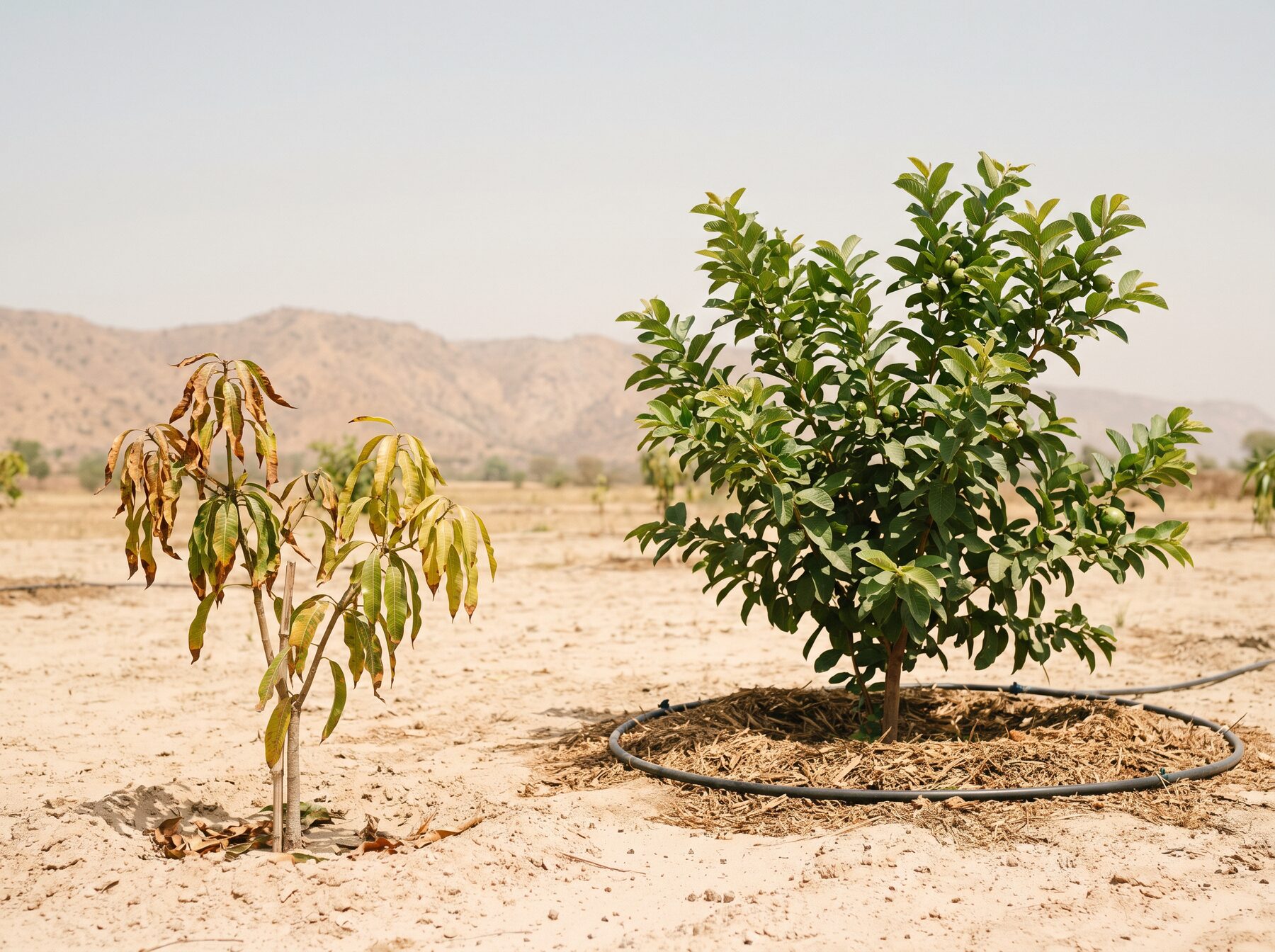
The easiest way to build a farm business near Jaipur would be to plant everything families ask for, right here. Mango, strawberry, apple, coffee: put them all on one plot, promise a harvest, and hope. Plenty of backyard mango trees in Rajasthan prove that a mango can survive here. But surviving and thriving are different things, and the gap between them is measured in kilos of fruit and years of disappointment.
What goes wrong with mango in Jaipur
Mango needs three things to crop well: a frost-free winter, a dry and mildly cool spell to trigger flowering, and a spring gentle enough for the fruit to set. Jaipur gets the dry spell. But it also gets occasional light frost nights in January, which scorch young grafts, and a spring that heats up fast. When March and April run hot and dry, mango flowers and tiny fruit drop in large numbers.
The soil adds a second problem. Soils around Jaipur are typically alkaline, with a pH of about 7.8 to 8.4. At that pH, iron becomes hard for many fruit trees to take up, and mango leaves turn yellow between the veins. You can manage it with chelated iron and careful feeding, but you're working against the land every single season.
Where each crop belongs
So we flipped the question. Instead of asking “what can we force to grow in Jaipur?”, we ask two others: where in India does this crop grow best, and what grows best in Jaipur?
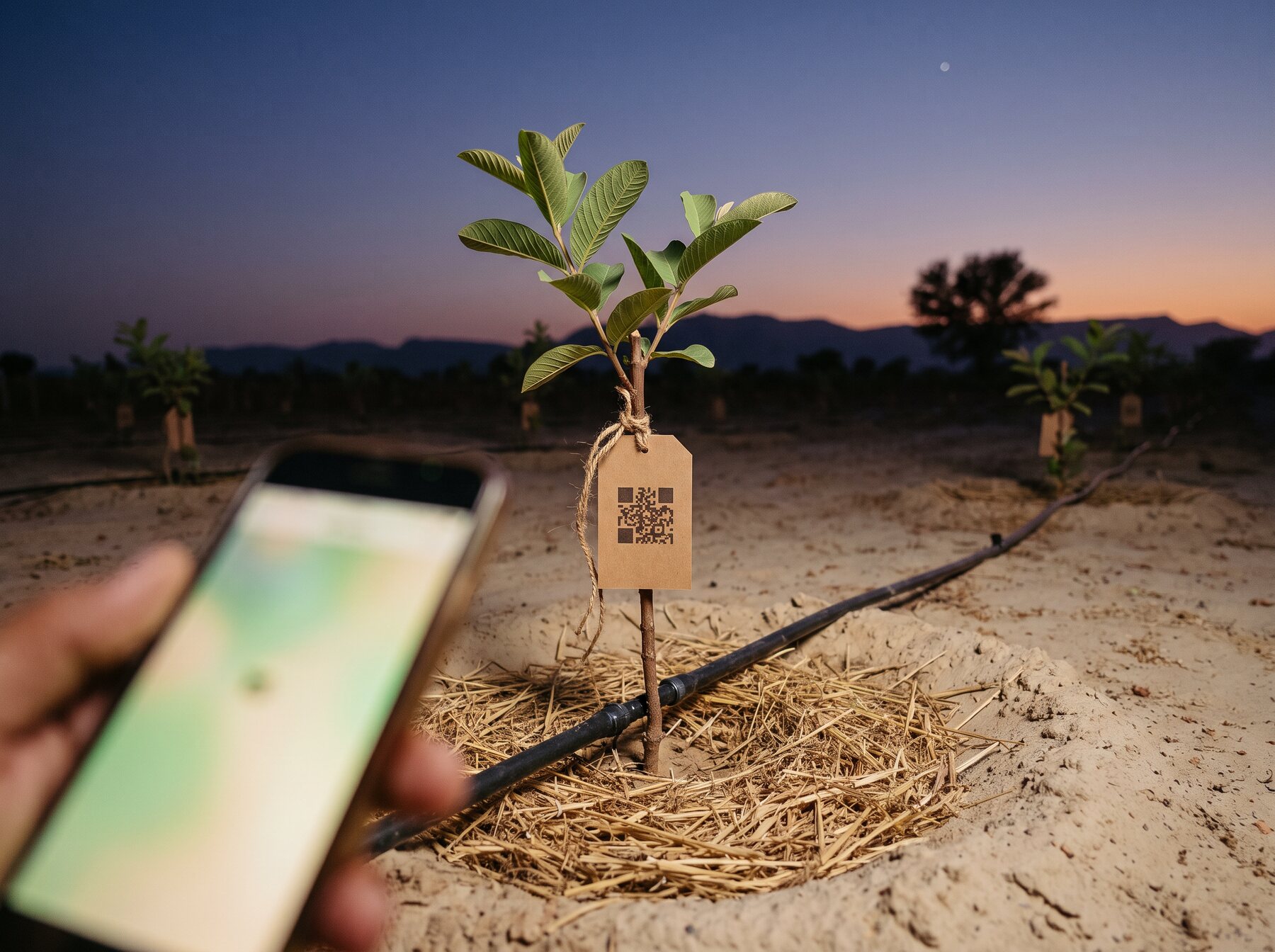
- Jaipur: guava, pomegranate, kagzi lime and amla. All four handle 45°C summers, low rainfall on drip and alkaline soil. The Sawai Madhopur belt next door is one of India's best guava regions, and ICAR's arid horticulture institute in Bikaner champions amla for Rajasthan.
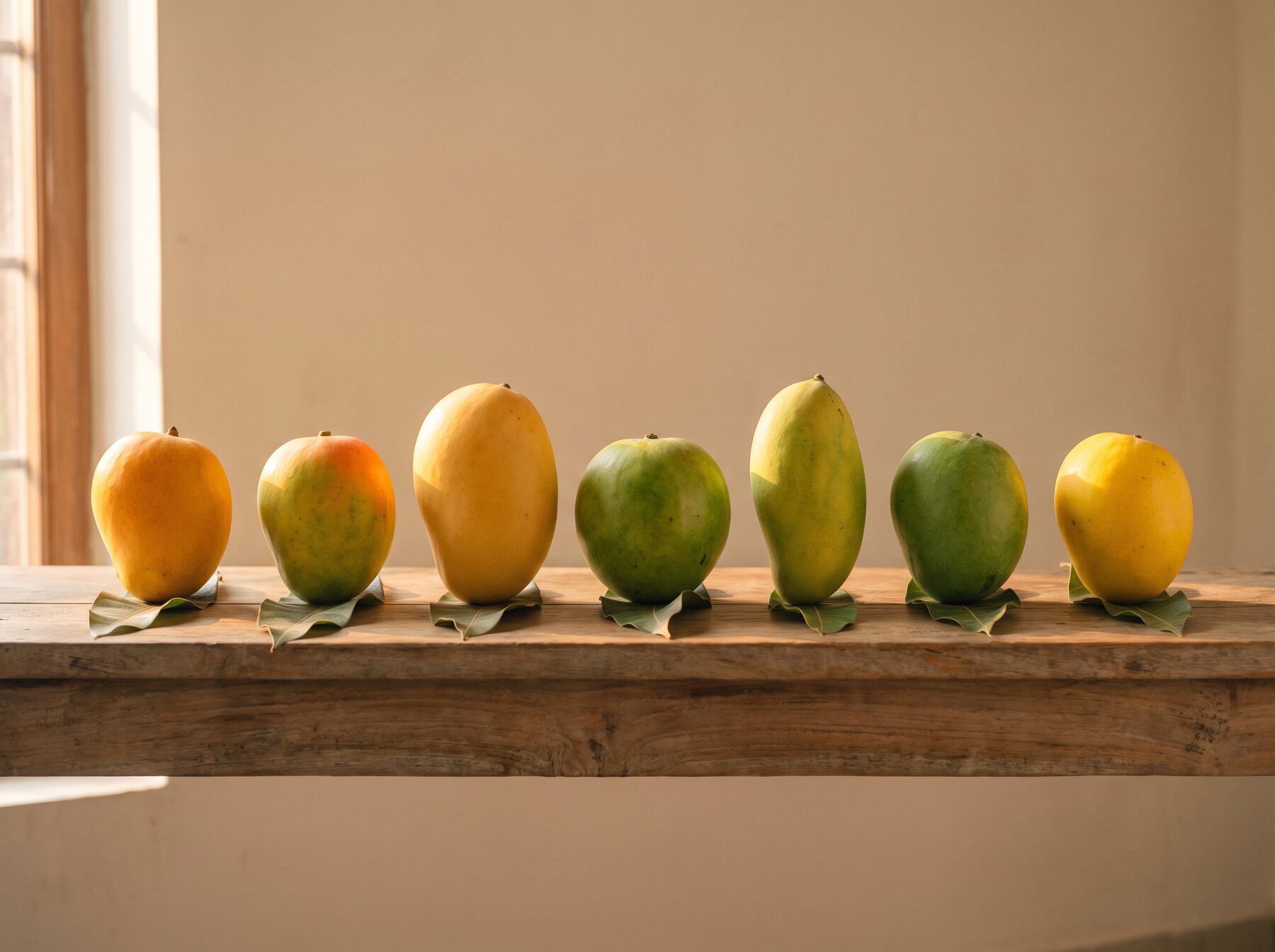
- Ratnagiri, on the Konkan coast: Alphonso, which needs a frost-free coast, acidic laterite and a dry winter to flower. Alphonso from the Konkan holds a Geographical Indication registered in 2018.
- Malihabad, near Lucknow: Dasheri, on deep Gangetic alluvium. Malihabadi Dasheri has been GI-registered since 2009.
- Mahabaleshwar: strawberries, from a plateau that produces most of India's crop.
- Kotgarh, Himachal Pradesh: apples, which need a long, cold winter.
- Coorg: shade-grown arabica with pepper vines. Nagpur: the mandarin.
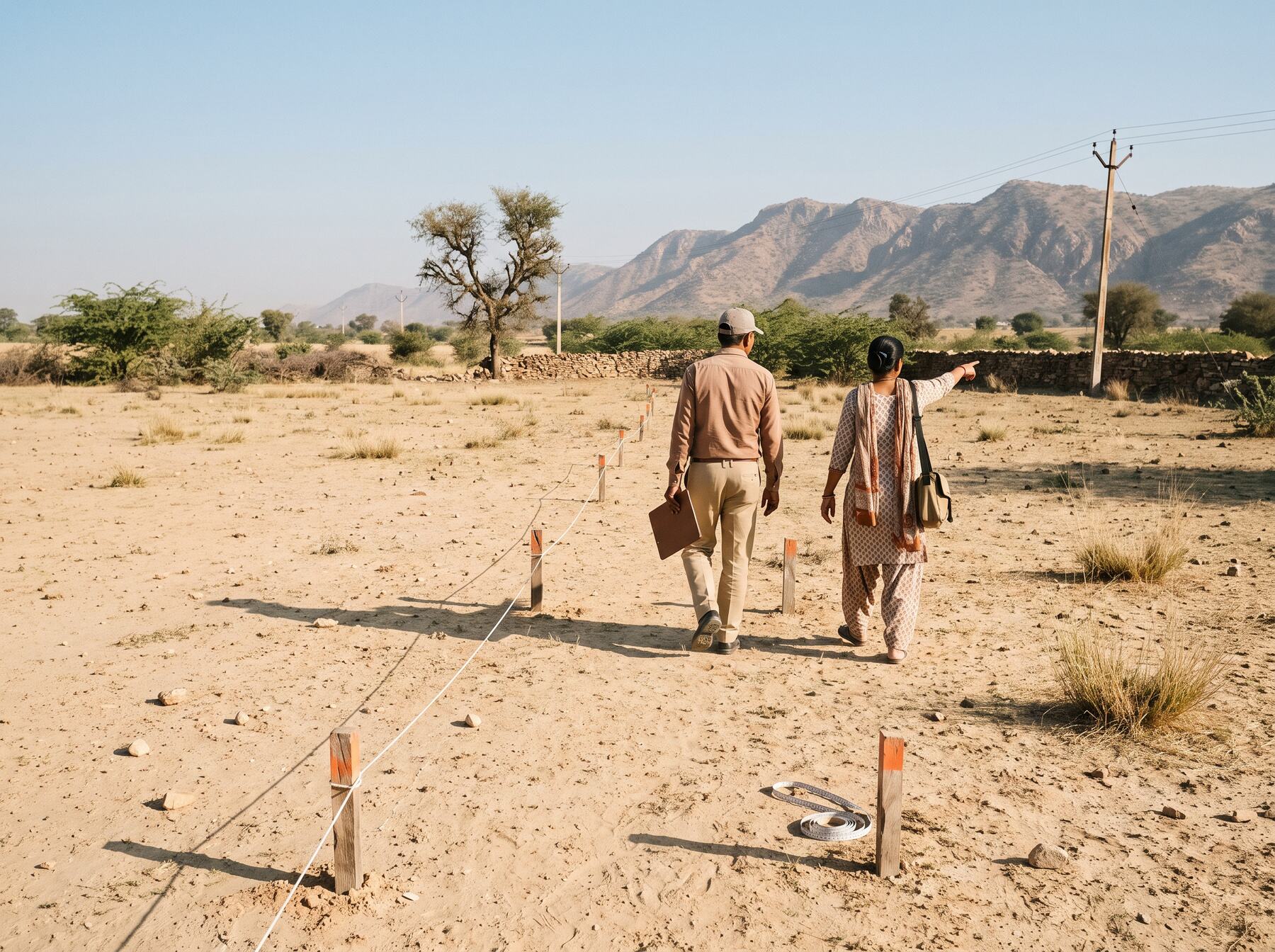
Jaipur is our pilot, and the only farm we plan to operate ourselves at first. Every other region is taking interest: we'll contract a partner farm only once enough families ask for a crop there. See the farm network.
How we score climate fit
To make these decisions consistently, and to show our working, we built a climate-fit score. For every crop on every farm, it compares what the crop needs with the farm's long-run climate normals across seven factors:
- Winter lows, the mean minimum of the coldest month.
- Summer highs, the mean maximum of the hottest month.
- Rainfall, where drip can top up a shortfall but can't remove excess.
- Winter chill hours, for temperate fruit like apple.
- Soil pH.
- Altitude.
- Humidity, a proxy for disease pressure.
Each factor scores between 0 and 1. The final score blends the weighted average with the single worst factor, so one serious mismatch drags everything down, the way it does in a real orchard. A crop needs 85 or more, which we call a native fit, before we'll plant it on a farm.
What this means for your family
It means your basket can include crops from more than one climate, each grown where it does best. It also means some crops arrive later than others, and some regions open later than others, because we wait for enough families before contracting a partner farm.
And it means we'll sometimes say no. If you ask us for Alphonso grown in Jaipur, we won't take the request, because we'd be selling you a harvest the climate won't deliver. We'd rather lose that request than make a promise the weather will break. If mango is what your family loves most, India's mango calendar shows where each variety really belongs.