How we'll choose the land for our first farm
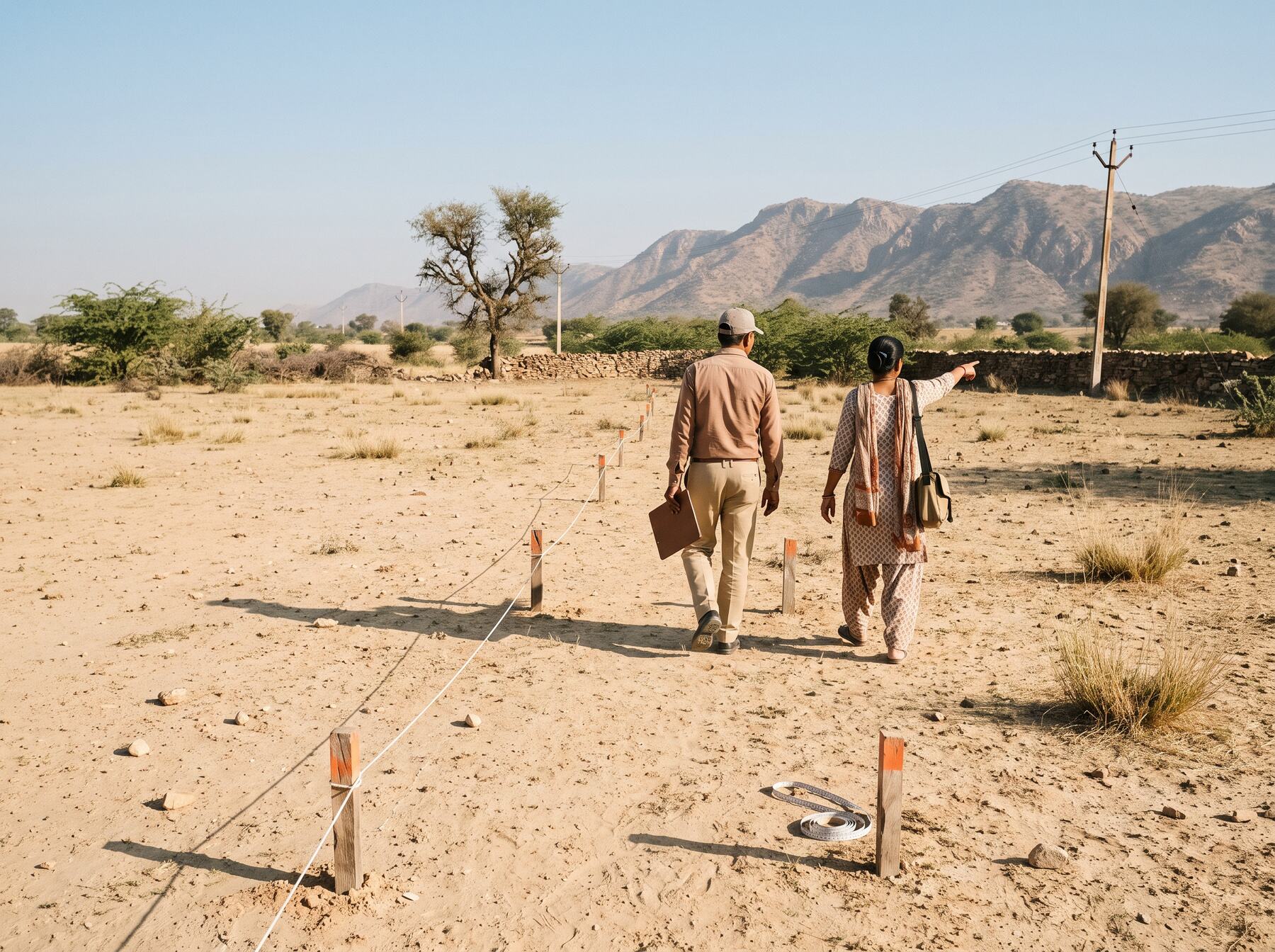
We're shortlisting plots within an hour of Jaipur. This is the checklist every plot has to pass before we sign a lease, and why we expect most of them to fail it.
On this page
We haven't signed a lease yet, and that's deliberate. The land decision is the one we can least afford to get wrong. An amla or a pomegranate tree can bear for decades. A lease that ends too soon, a borewell that turns salty or a boundary dispute can undo years of careful work. So before we sign anything, every candidate plot has to pass a checklist, and we expect most of them to fail it.
Why lease, not buy
We're leasing rather than buying, for three reasons. It keeps our money in the farm itself (soil, water, plants and people) rather than locked up in land. It avoids the complexity of buying agricultural land in Rajasthan. And it keeps the offer to families clean: nobody is buying a slice of land through us, and nobody ever will. Families reserve a managed allocation of plants, not a plot.
Because fruit trees live a long time, we're looking for a registered lease of around nine to eleven years with an option to renew. In India, a lease of land for more than a year has to be registered to be valid, and we'll do that properly, with a lawyer reviewing it.
The checklist
Here's what every plot has to clear, roughly in the order we'll check it.
- Distance. Within about an hour of central Jaipur, so families can actually visit and fresh produce can reach Jaipur homes within a day or two of picking.
- Clean title. We'll check the land records (jamabandi and khasra entries), confirm the owner's name matches, look for mortgages and disputes, and make sure the plot is recorded for agricultural use.
- Access. An all-weather road for a small truck. Saplings, compost and harvests have to move in and out, including in the monsoon.
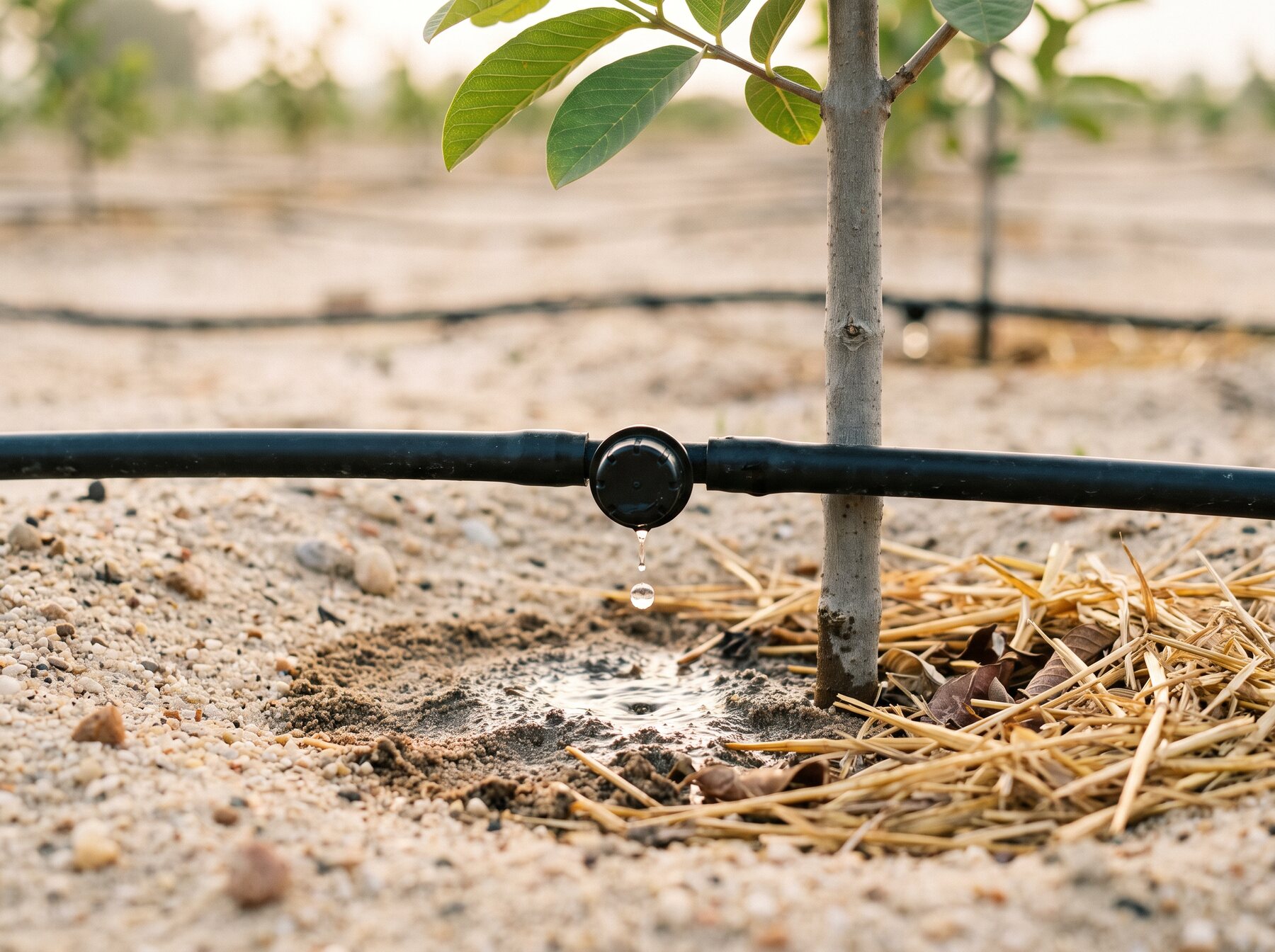
- Water, in quantity. A working borewell or another reliable source, with its yield measured, not just described. We'll also ask neighbours how their wells behaved in the last few dry summers.
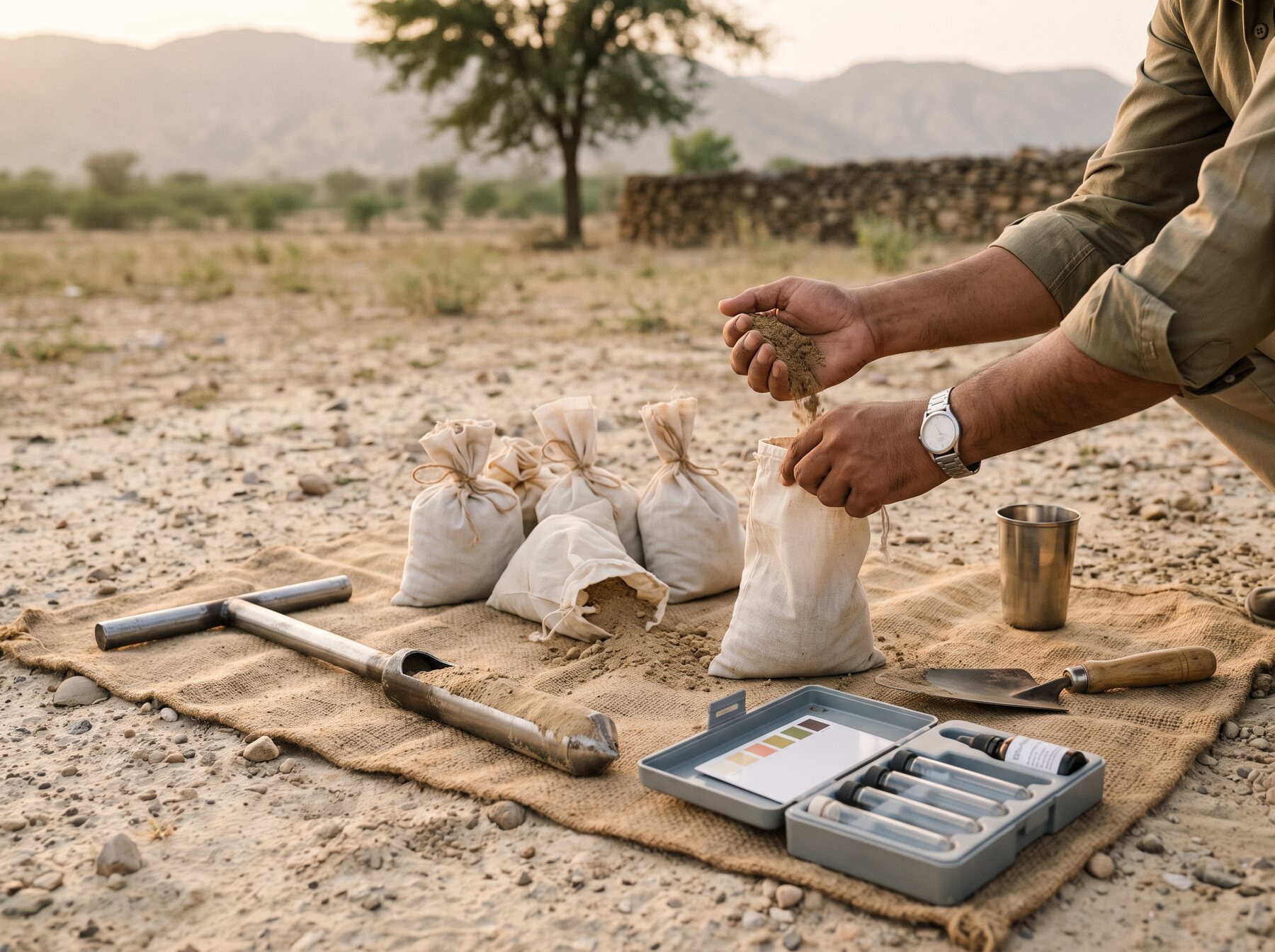
- Water, in quality. A lab test for salinity (EC), sodium hazard (SAR) and residual sodium carbonate (RSC). Pomegranate and citrus are sensitive to salty water. More in our water post.
- Soil. A lab test for pH, salts, organic carbon and nutrients, plus pits dug to check depth. A hard lime (kankar) layer close to the surface can stop tree roots. How we'll read the soil test.
- Drainage. No low spot where monsoon water sits. Guava wilt and citrus root rot both love waterlogged soil.
- Electricity. A working agricultural power connection for the pump, with realistic supply hours.
- Neighbours. What's grown next door, and what gets sprayed, matters. Drift from heavy spraying can undo a careful plan.
- Visits. Whether we can host families properly. Parking, shade and toilets on agricultural land can need permissions under Rajasthan's land conversion rules, so we'll have that reviewed rather than assume.
What the region gives us to work with
Eastern Rajasthan is semi-arid. Rainfall around Jaipur averages about 630 mm a year, most of it between July and September. Soils are commonly sandy loams: well drained, low in organic matter, with an alkaline pH in the 7.8 to 8.4 range. Summers peak at 45°C or more in May; winters are bright and cool, with the odd frosty night in January.
That combination rules some crops out (see why our mangoes won't grow in Jaipur) and makes others shine. Guava, pomegranate, kagzi lime and amla handle heat and alkalinity well, and the October to March rabi season is one of the best vegetable windows in India.
How the decision will be made
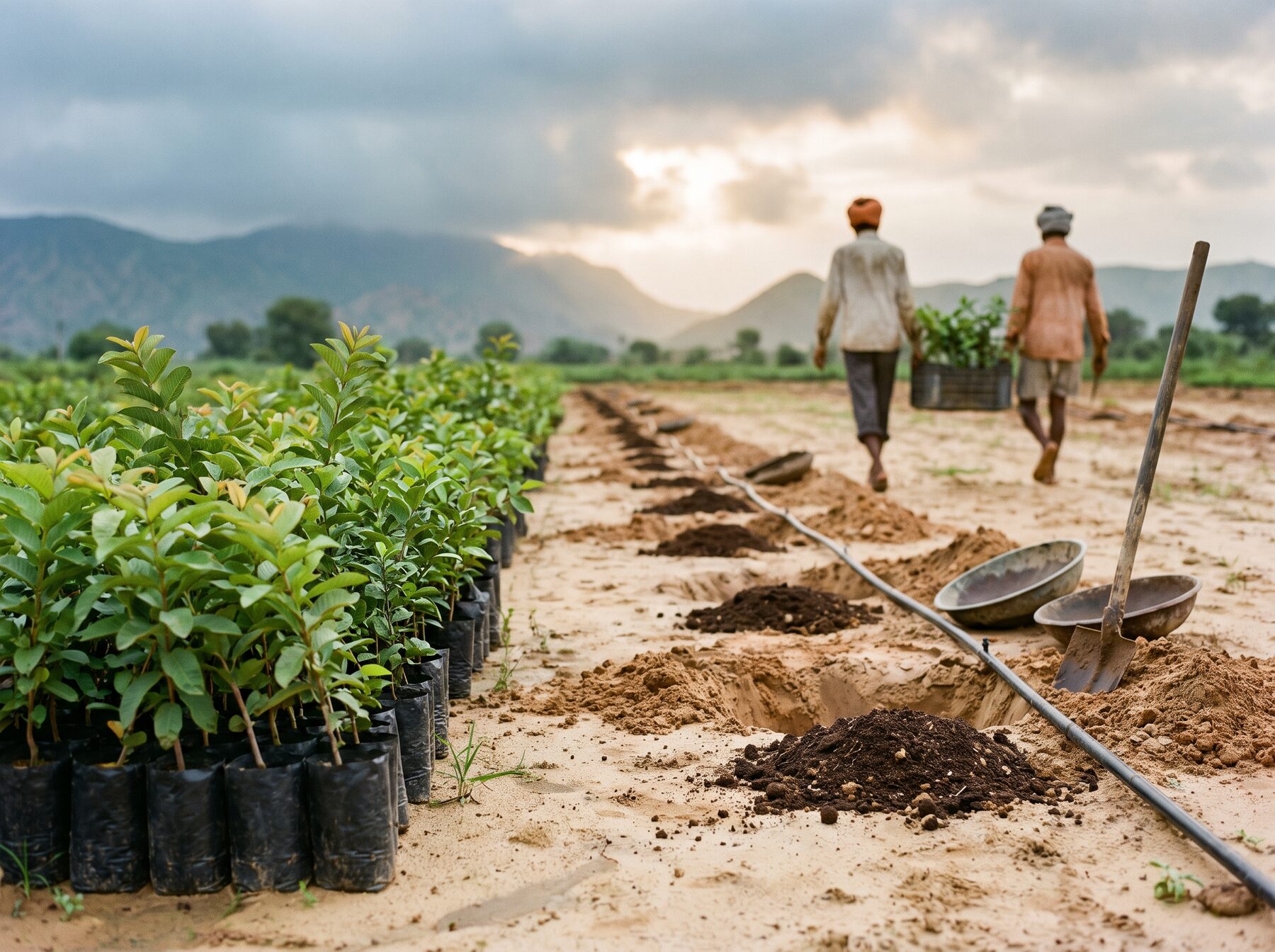
Once we have two or three plots that pass the basics, we'll send soil and water samples to an accredited lab, walk each plot with our horticulturist, and compare the results side by side. The final layout of the farm depends on those results: which crop goes in which block, how far apart the trees are, where the rainwater pits go.
That's why the farm plan on our website is a draft. Your number of plants, your share of the harvest and your price won't change if the layout does, but your spot on the map might, and we'll tell you if it does.
Our target is to sign by November 2026 and plant on 13 February 2027. If the right land takes longer to find, we'd rather move the date than compromise on water or title.