अपना खेत, अपनी फ़सल
Modern agri-tech for a very old idea: a farm in the family.
UGAANA connects city families with professionally run, climate-matched farms. Software decides where each crop should grow and whether enough families want it to plant. A farm team does the work. Every plant carries a passport you can scan. You get the food, the story and the visits, without buying land.
- 11climate-matched regions
- 16crops in the catalogue
- 176crop × region fits scored
- 7climate factors per score
Many Indian families left the farm a generation ago. Not their love of it.
- 01
Families want better food
Freshness, provenance and how food is grown matter more every year. Most of us still have no idea where our food came from.
- 02
People want a farm, not farming
Plenty of families would love their own mango trees. Very few want to buy land, hire labour, lay irrigation and fight pests.
- 03
Children are disconnected
For a city child, mango means supermarket. It used to mean tree, flower, fruit, harvest, and a grandmother's courtyard.
- 04
Agriculture is hard to join
Traditional farming needs ownership and daily involvement. There has been no simple, honest way in for a busy family.
UGAANA takes the complexity away. You see “My farm”. We handle everything underneath it.
Four layers. One farm for your family.
Physical farms at the base, the plants allocated to you on top of them, one clear membership around that, and the technology that ties it together.
The climate-fit engine decides where each crop grows, Farm OS plans planting from real demand, the plant passport shows every plant's life, and the harvest wallet handles what happens to the crop.
A single membership agreement: a one-time setup fee, a yearly care fee, harvest protection and your harvest choices. You don't own land or trees, and it is not an investment.
Specific trees, vegetable and herb beds, or protected-cultivation modules, each with its own QR tag. Your allocation is the right to have them grown for you and to receive what they produce.
Climate-matched land, leased and never sold, soil- and water-tested before any lease is signed. Drip and fertigation, rainwater pits, a named farm manager and a trained team working every day.
Every crop scored against every region, before a sapling is ordered.
Try it. Pick a crop to see how it scores in each region, then pick a region to see the seven factors behind the number. These are the real scores the network is planned on.
We plant alphonso mango only in Ratnagiri (registering interest). Everything under 85 stays off the plan.
- Winter lows768°C coldest-month low; needs ≥ 10°C
- Summer highs7041°C hottest-month high; tolerates ≤ 38°C
- Rainfall94630 mm/yr; comfortable 750–3,500 mm (drip can top up)
- Winter chill100No chill needed
- Soil pH64pH 8.1; suits 5–7.5
- Altitude100430 m; suits 0–600 m
- Humidity60Low humidity; prefers high
Seven factors from long-run regional climate normals. A single failing factor pulls the whole score down, because one bad winter is enough to lose a crop. The full climate atlas →
The engine scores all 16 crops against all 11 regions, 176 pairs, every time the data changes.
No crop is planted without families behind it.
Farm OS plans planting from real reservations, not guesses. It keeps land, saplings and people from being committed to crops nobody asked for, which keeps the service honest and the farm sustainable.
- 01InterestFree
Tell us what you'd like to grow. No money, no commitment.
- 02WaitlistFree
For crops that are full, or farms that haven't opened yet. We message you when space opens.
- 03ReservationFree request · ₹1,000 refundable later
Holds your spots while other families join. We collect the refundable ₹1,000 only when your crop is close to going ahead.
- 04MembershipSetup + annual care
Once enough families join: sign the agreement, pay the setup fee, and we plant.
Nothing is planted until a crop reaches its threshold.
Every crop has a planned zone size and a threshold: the point where it makes sense to prepare land and plant. Guava at the Jaipur pilot, for example, is planned for 400 trees and goes ahead at 240.
If not enough families join. You pay nothing for that crop. Any reservation paid is refunded in full, or moved to a crop that is going ahead.
Every plant gets a tag, a timeline and a face.
A weatherproof QR tag goes on every tree and bed at planting. Scan it on the farm, or open it from your dashboard at home, and you see that plant's whole life so far.
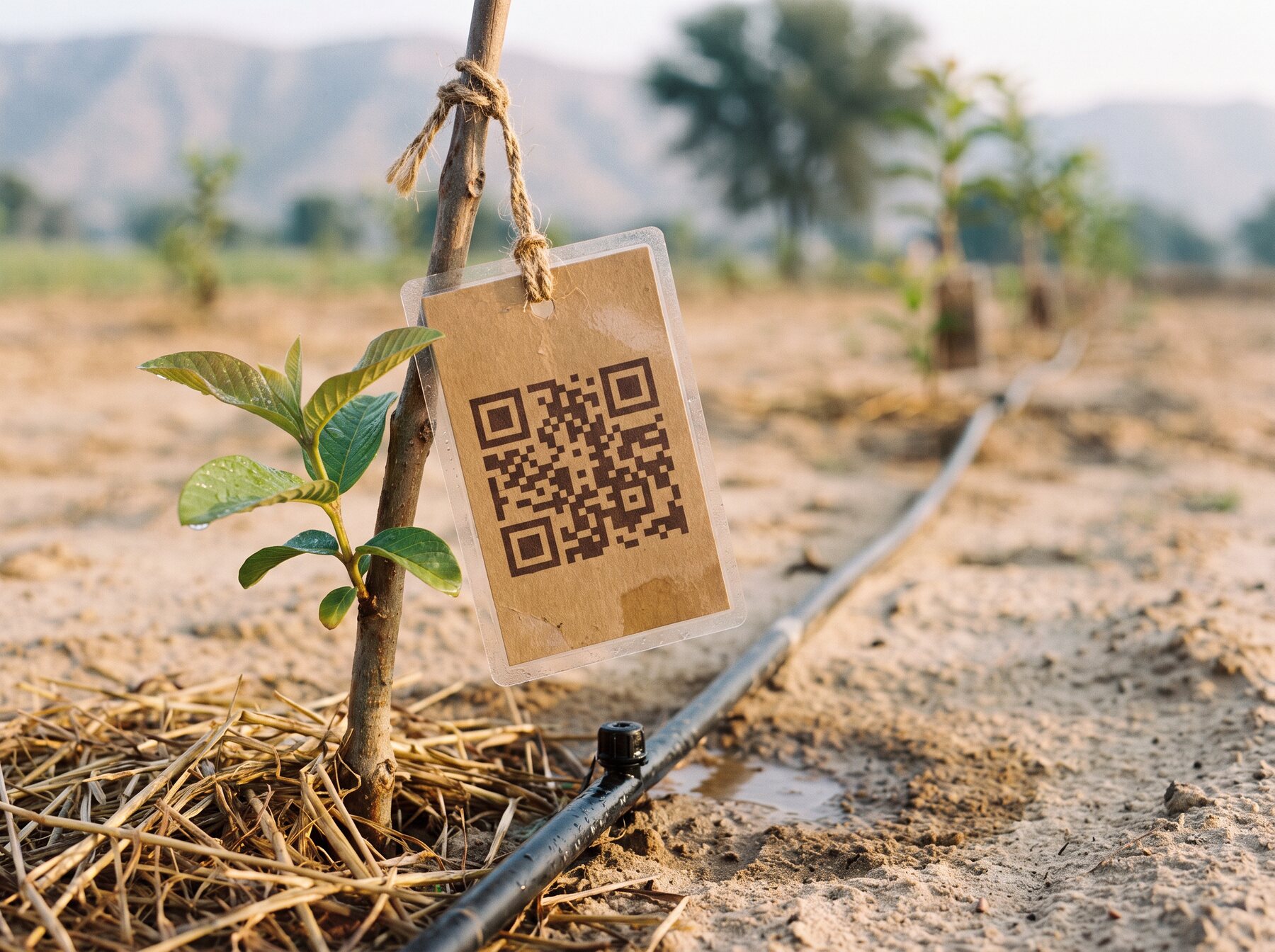
- ReservedYour request
- Planted13 Feb 2027
- EstablishingWeekly photos
- First floweringLogged by the horticulturist
- First harvestWinter 2028
- Crop, variety and rootstock
- Planting date and its place on the farm
- Current growth stage
- Weekly photos
- Inspections, treatments and every input used
- Water and fertigation log
- Harvest history, weighed
Tags are assigned at planting. The passport shown here is an illustration, not a real plant.
Your farm, in your pocket.
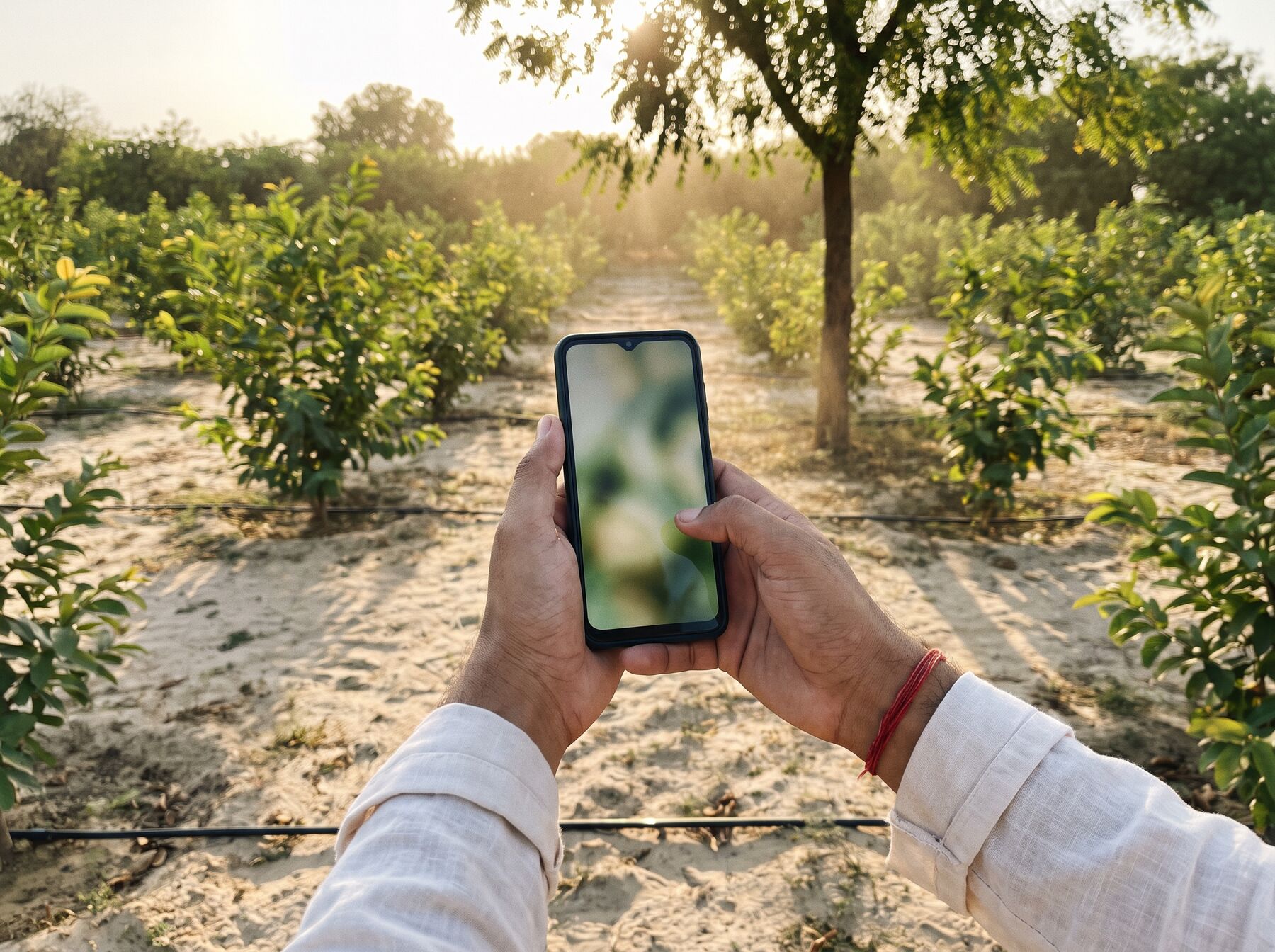
The member dashboard is where the farm and your family meet. Plant timelines, photos and inspections begin on planting day; the preview below shows the design, with example values.
- Your allocationsEvery tree and bed you have, with the stage each crop is at.
- Farm statusWeather, irrigation and the next milestone for your farm.
- VisitsPlanting day, open farm days, children's workshops and private mornings.
- Money, plainlySetup and care invoices line by line, credits and your harvest wallet.
What happens to the harvest is your call.
Each picking is weighed, batched and credited to your harvest wallet. Then you split it however suits your family that season.
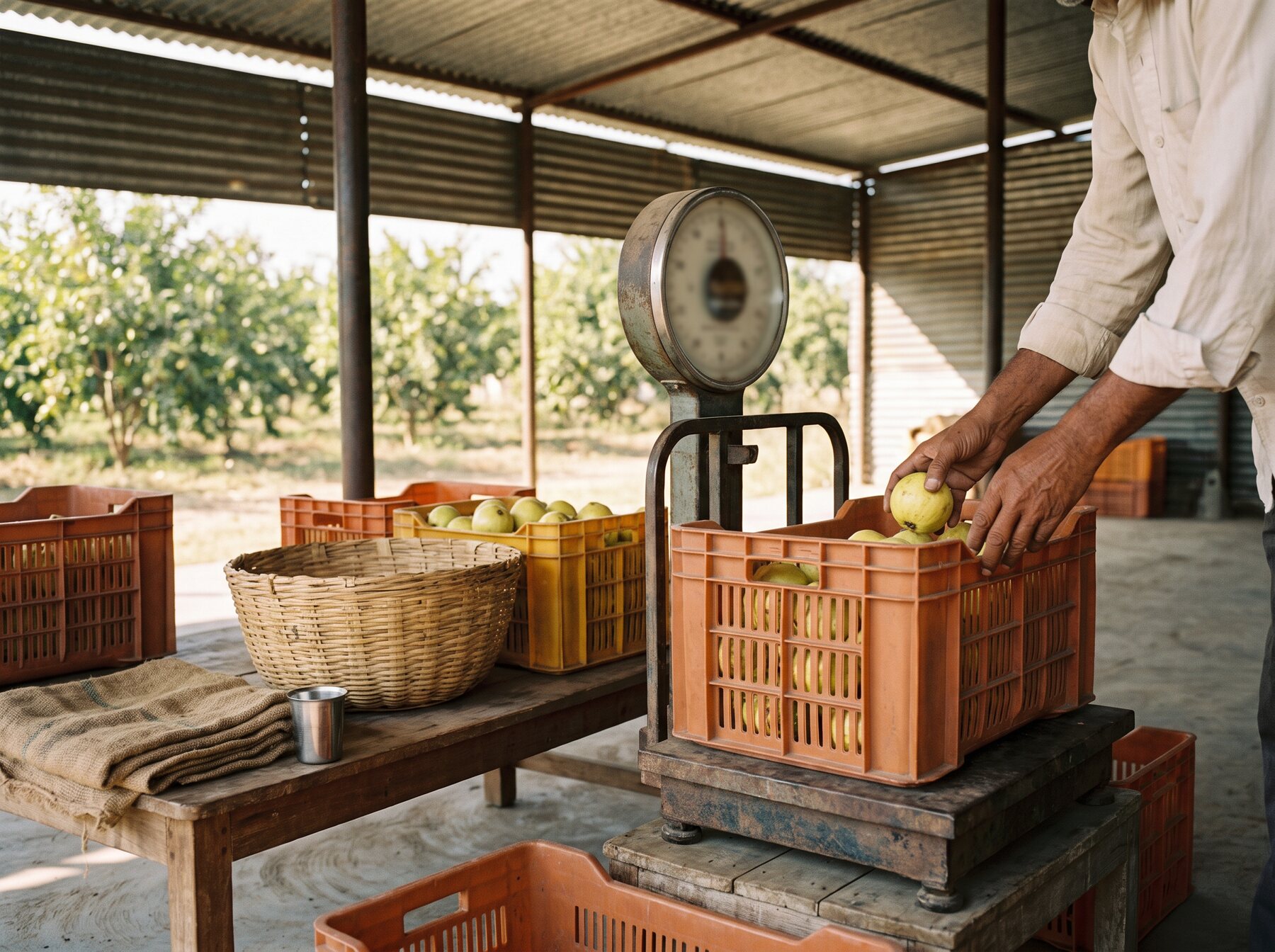
You decide the split every season.
- DeliverCrated and delivered to your door, usually within 48 hours of picking in Jaipur.
- ConvertSwap one harvest for a mixed basket of what's in season, at that day's rates.
- DonateSend it to a partner food bank. You get a receipt for your records.
- Farm creditKeep the value as credit for care fees, visits or produce.
Selling produce through UGAANA may come later, and only where the law allows.
Four numbers for every crop. The last one is the truth.
Agriculture varies with weather, plant health and variety. So we never promise a yield. We show you the research, our planning range and a conservative figure before you reserve, then publish the actual weight after each harvest.
- Reference10–12 kg/plantICAR-CISH meadow orchard, 2 × 1 m spacing (40–60 t/ha); wider-spaced trees give 20–40 kg
- Planning5–10 kg/plantOur planning range for years 2–4
- Conservative3 kg/plantWhat we plan around for a poor season
- ActualWeighedPublished after every harvest, from Winter 2028
- Harvest protectionIf a documented farm-level failure leaves you below 50% of the planning range, you get replacement produce, farm credit or replanting.
- If a plant diesWe replace it at no cost in the next planting window, and your timeline shows exactly what happened.
- If not enough families joinYou pay nothing for that crop. Any reservation paid is refunded in full, or moved to a crop that is going ahead.
- Yield honestyEvery crop has a reference, planning and conservative figure. After each harvest we publish the actual.
The standard every farm has to meet.
The Jaipur pilot is ours to run. Farms beyond it will be run with partner growers in their home belts, and every one of them has to meet the same bar. No partner farm is contracted yet; when one is, we'll publish how it measures up.
- 01A native climate fit (85+) for every crop planted
- 02Soil, water and title checks before any lease or contract
- 03Planting material from accredited nurseries, variety chosen after the soil test
- 04Drip irrigation and a written water plan
- 05A named farm manager and a supervising horticulturist
- 06Every input, spray and treatment logged in Farm OS, visible to members
- 07Weekly photos and inspections for every allocation
- 08Fair, on-time pay for farm teams and partner growers
- 09Families welcome to visit and see for themselves
- 10No crop planted until its threshold is met
A farm takes twelve jobs. Eleven are ours.
Yours is the fun one: choosing what to grow. We handle everything else, from matching each crop to its climate to the crate at your door, and show you each step as it happens.
No land leased. Nothing planted yet. Here's the plan.
We'd rather you hear it from us: the platform is live and we're shortlisting land within an hour of Jaipur. Every step below is published as it happens, and planting day is a target, not a promise: 13 Feb 2027.
- Sep 2026UGAANA platform live · reservation requests openDone
- Oct 2026Land shortlisting within an hour of Jaipur · soil & water tests on candidate plotsIn progress
- Nov 2026Lease signed on the plot that passes the testsPlanned
- Dec 2026Fencing, drip and fertigation, rainwater pits, nurseryPlanned
- Jan 2027Saplings hardening off in the nurseryPlanned
- Feb 2027Planting day with reserving families (target 13 Feb)Planned
- Mar 2027First herb harvestPlanned
Put a farm back in your family.
Build your farm in two minutes and send a free reservation request. Nothing to pay today.
Run an orchard in a climate-matched belt, own land near Jaipur, or lead a farm team? We'd like to hear from you.
UGAANA offers a managed agricultural service. Members do not own land, trees or any share in the farm, and membership is not an investment. Harvest quantities shown are reference, planning and conservative estimates, not promises; actual harvests depend on weather, plant health and variety. Reservation requests are free and non-binding. Any reservation amount collected later is refundable in full until the membership agreement is signed. Final terms are set out in the membership agreement.