India's mango calendar: which mango, where, and when
From Alphonso in March to Chausa in August, India's mango season travels across the country for almost six months. Here's the calendar, region by region, and why each great mango belongs to its place.
On this page
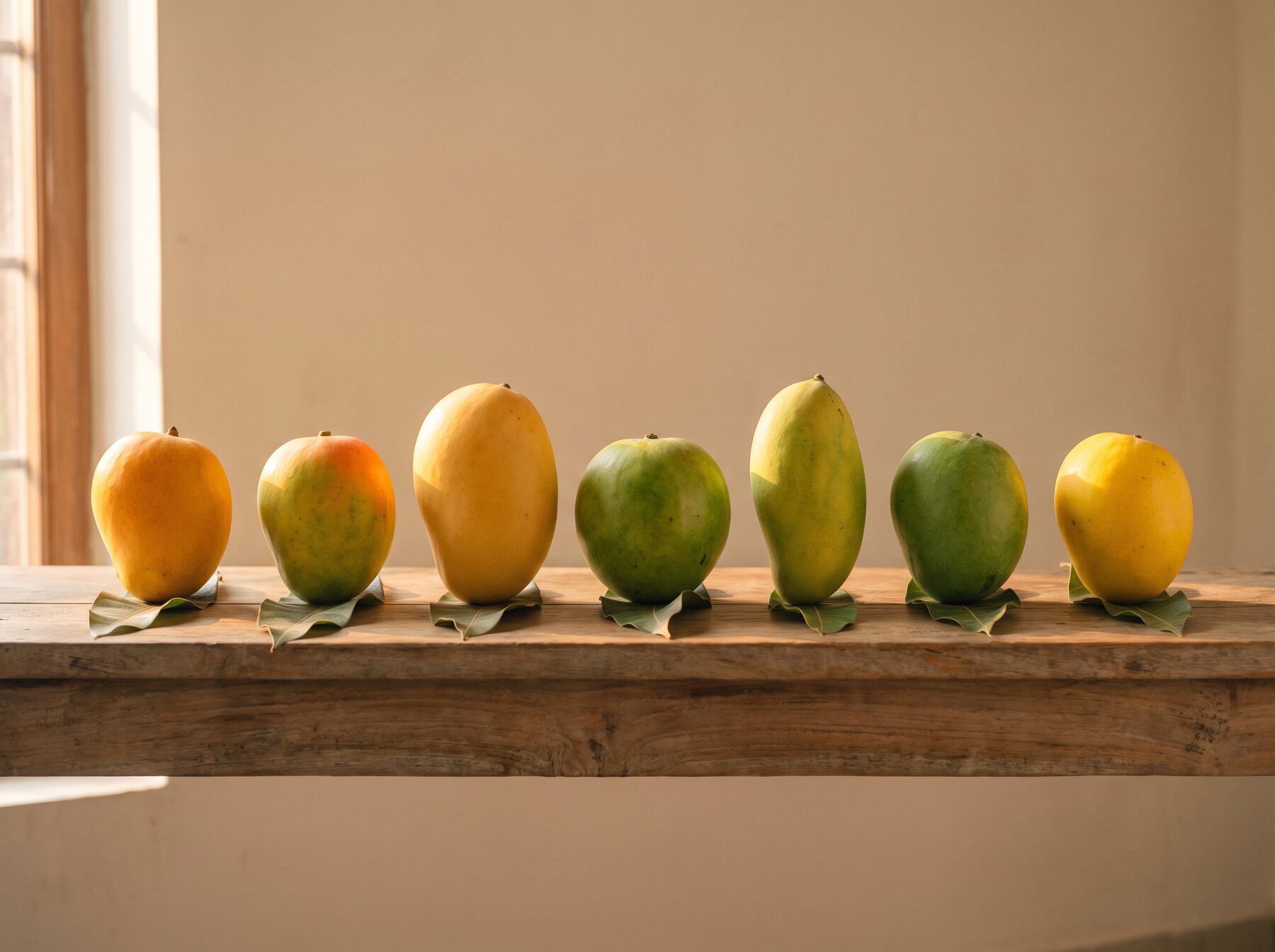
Most countries have a mango season. India has a mango calendar. It opens on the Konkan coast and in the south as winter ends, moves north through the summer, and closes in Uttar Pradesh and Bengal as the monsoon settles in. India grows more mangoes than any other country in the world, and more named varieties than anyone could taste in a lifetime. If you know where to look, you can eat a different great mango almost every week from March to August.
Each of those mangoes is the work of generations: growers who selected, grafted and protected a variety until it became part of a region's identity. Several now carry a Geographical Indication, the legal recognition that a product's character comes from its place. That's heritage worth being proud of, and worth protecting.
One caveat every grower will give you: weather moves the calendar. A warm winter, a late cold spell or unseasonal rain at flowering can shift a region by two or three weeks, and many varieties bear heavily one year and lightly the next.
March to May: the west coast and the south
Alphonso (Hapus), Konkan coast. The first famous mango of the year. Fruit from Ratnagiri and Devgad starts arriving in March and peaks in April and May. Saffron flesh, no fibre, and a scent that fills the house. Alphonso from five Konkan districts holds a Geographical Indication, registered in 2018. It's strongly alternate-bearing, and prone to spongy tissue in some fruit. Alphonso on UGAANA.
Banganapalle, Andhra Pradesh and Tamil Nadu. A large, golden, gently sweet mango with firm, fibreless flesh, in season from about April to June. It grows widely around Kurnool in Andhra Pradesh and in Tamil Nadu's Krishnagiri district, one of the country's great mango districts.
Totapuri and Neelam fill out the southern season. Totapuri, with its parrot-beak tip, is the backbone of India's mango pulp industry; Neelam is a late, fragrant variety that carries the south into July.
May to June: Gujarat and Bengal
Kesar, Gir and Saurashtra. Grown around the Gir forest in Junagadh and Amreli, Kesar is saffron-orange inside, intensely sweet and the heart of Gujarati aamras. Gir Kesar is GI-registered. Its season runs from about mid-May into June.
Himsagar, West Bengal. Around Malda and Murshidabad, Himsagar (also called Khirsapati) ripens from late May through June: medium-sized, fibreless and creamy. Its season is short, and plenty of Bengalis will tell you it's the finest mango in India.
June to August: the north
Dasheri, Malihabad. The Malihabad belt near Lucknow is Dasheri's birthplace and heartland. Slim, honey-sweet and fragrant, it's in season in June and July. Malihabadi Dasheri has been GI-registered since 2009. Dasheri on UGAANA.
Langra, Varanasi. Green-skinned even when fully ripe, with a sharp, lemony sweetness, in July.
Chausa, western Uttar Pradesh. Saharanpur and the surrounding belt grow Chausa, one of the last great mangoes of the year: very sweet, very juicy, and best eaten the old way, by softening it in your hands and sucking the pulp from a small hole in the skin. It runs from July into August.
Fazli, Malda. A very large, late mango that closes the season in Bengal and Bihar in August.
Why one farm can't grow them all
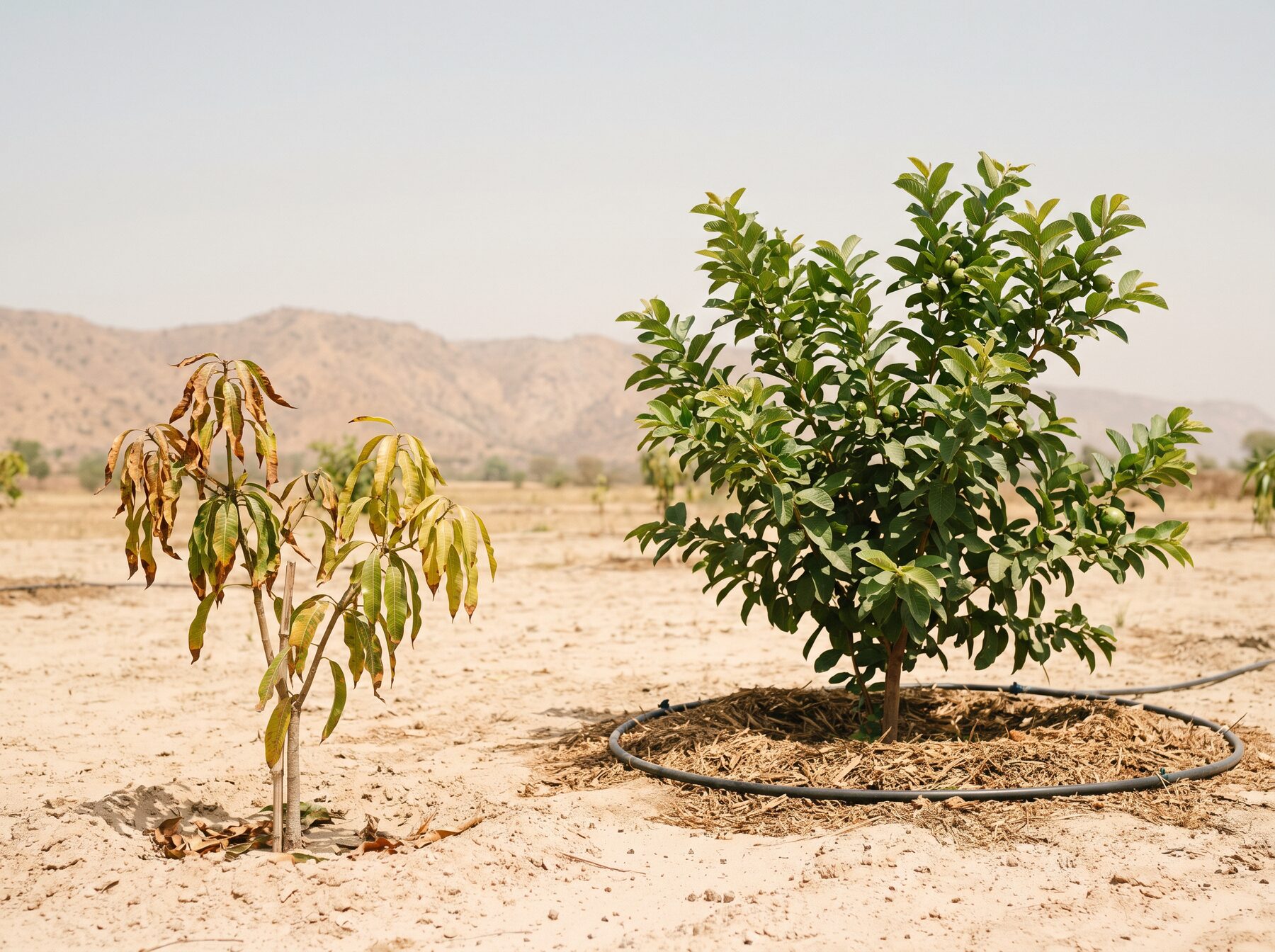
Look at that calendar and one thing stands out: each great mango is tied to a place. Alphonso needs a frost-free coast and acidic laterite. Dasheri likes deep alluvial soil and a dry flowering season. Kesar thrives in Saurashtra's heat. Move them and they usually do worse. That's why we don't plan to grow mango near Jaipur at all. Why not.
It's also why UGAANA's mango plans are regional. Alongside Ratnagiri and Malihabad, we're looking at mango country such as Krishnagiri, Saharanpur, Gir and Malda. Each is at the interest stage: we'll contract a partner orchard in a region only once enough families register, and we'll grow only the varieties that belong there, with the growers who know them best.
A mango carries its place inside it. The best thing we can do is grow each one where it was born.
How to choose a good mango
- Smell the stem end. A ripe mango smells sweet and fruity there. No smell usually means little flavour.
- Press gently. A slight give, like a ripe peach. Skin colour is a poor guide; Langra stays green when ripe.
- Be wary of fruit that's evenly bright yellow outside but pale and hard inside. Ripening with calcium carbide is banned in India, but it still turns up.
- Let it finish at home. Keep firm mangoes at room temperature, not in the fridge, until they soften and smell ripe.
What a mango tree asks of you
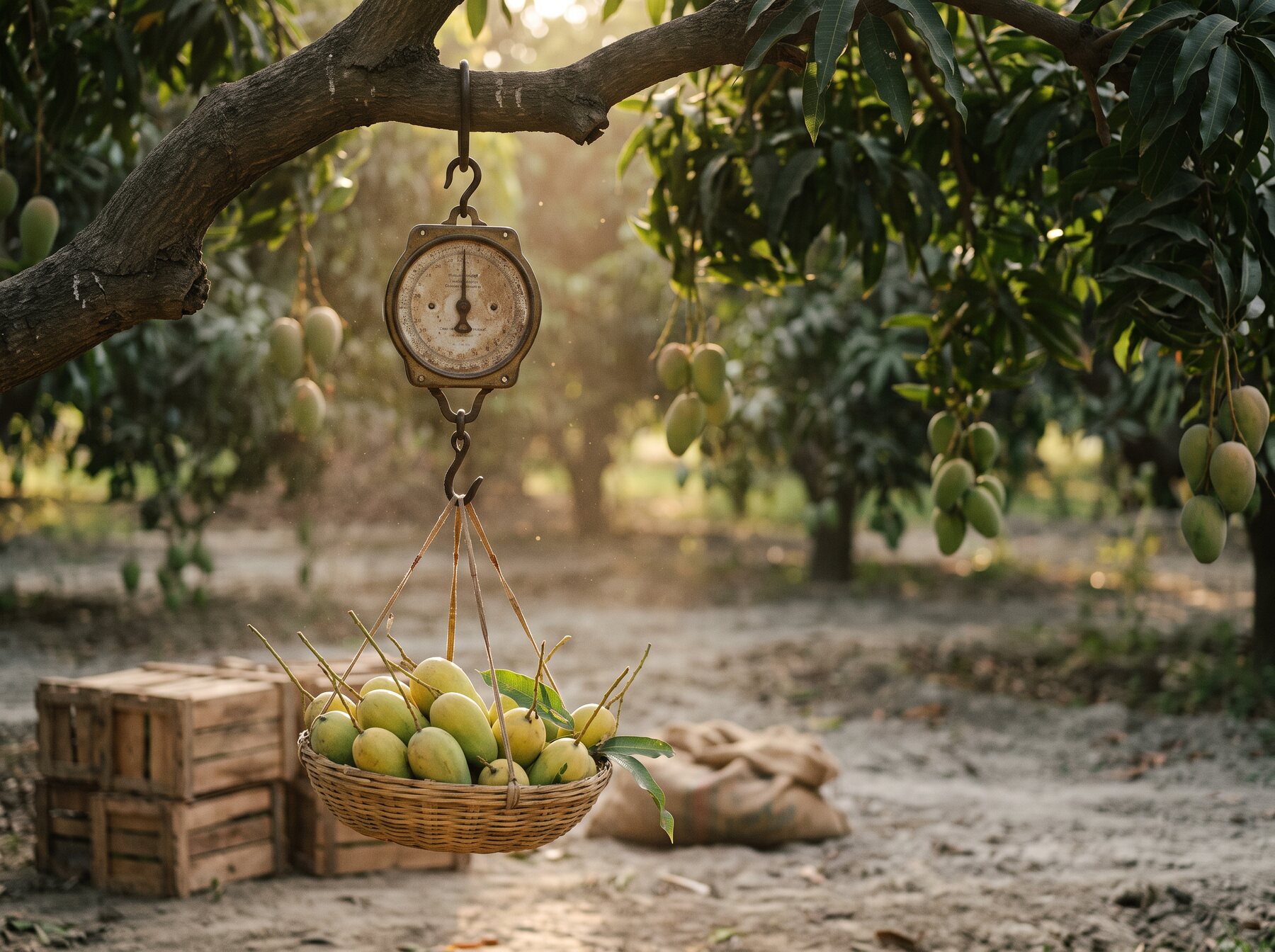
A grafted mango tree typically takes four to five years to bear a meaningful crop, and around a decade to reach full bearing. Numbers vary a lot too: a mature Alphonso tree might give 40 to 80 kg in a good year and far less the next. On UGAANA we show the published reference figure, our much lower planning range for the early years, and a conservative figure, and we'll publish every actual harvest. How we talk about harvests.
It's a long wait. But families who have waited for a tree's first fruit tend to say the same thing: that mango tastes like nothing you've ever bought.