Under the hood: the technology behind UGAANA
A climate-fit engine, demand-first planning, a passport for every plant and a harvest wallet. Here's what each piece does, what it will never do, and why modern Indian agriculture needs it.
On this page
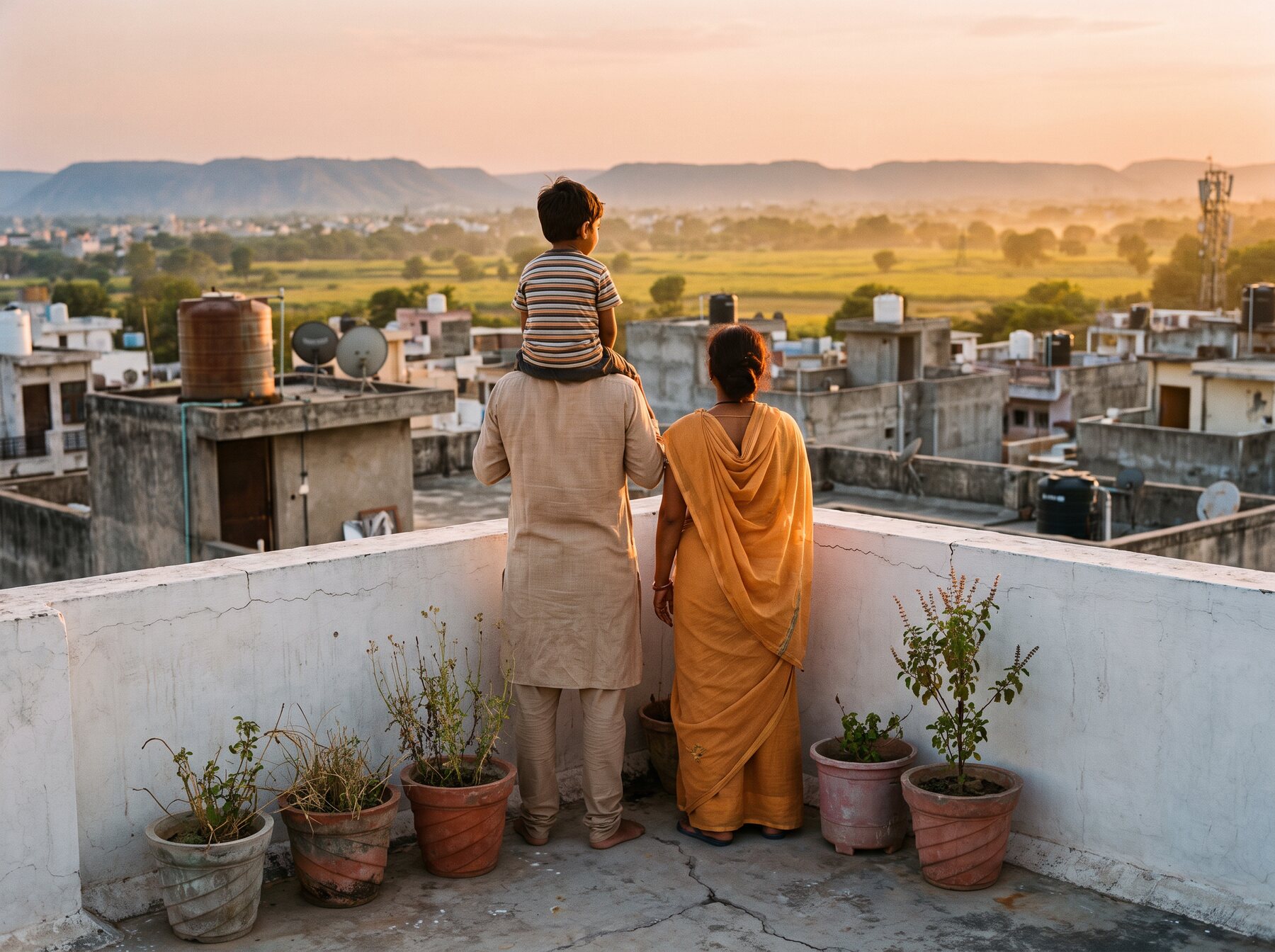
India is in the middle of a quiet agricultural revolution. Drip and fertigation have spread across Maharashtra's grape and pomegranate belts. Farmers check mandi prices and weather on their phones. Soil Health Cards have put lab results in millions of hands. UGAANA is built on that foundation. We're a farm business and a software business at the same time: the farm grows the food, and the software makes it possible to grow it transparently for families who live far from the field.
Here's what's under the hood, in plain words.
1. The climate-fit engine
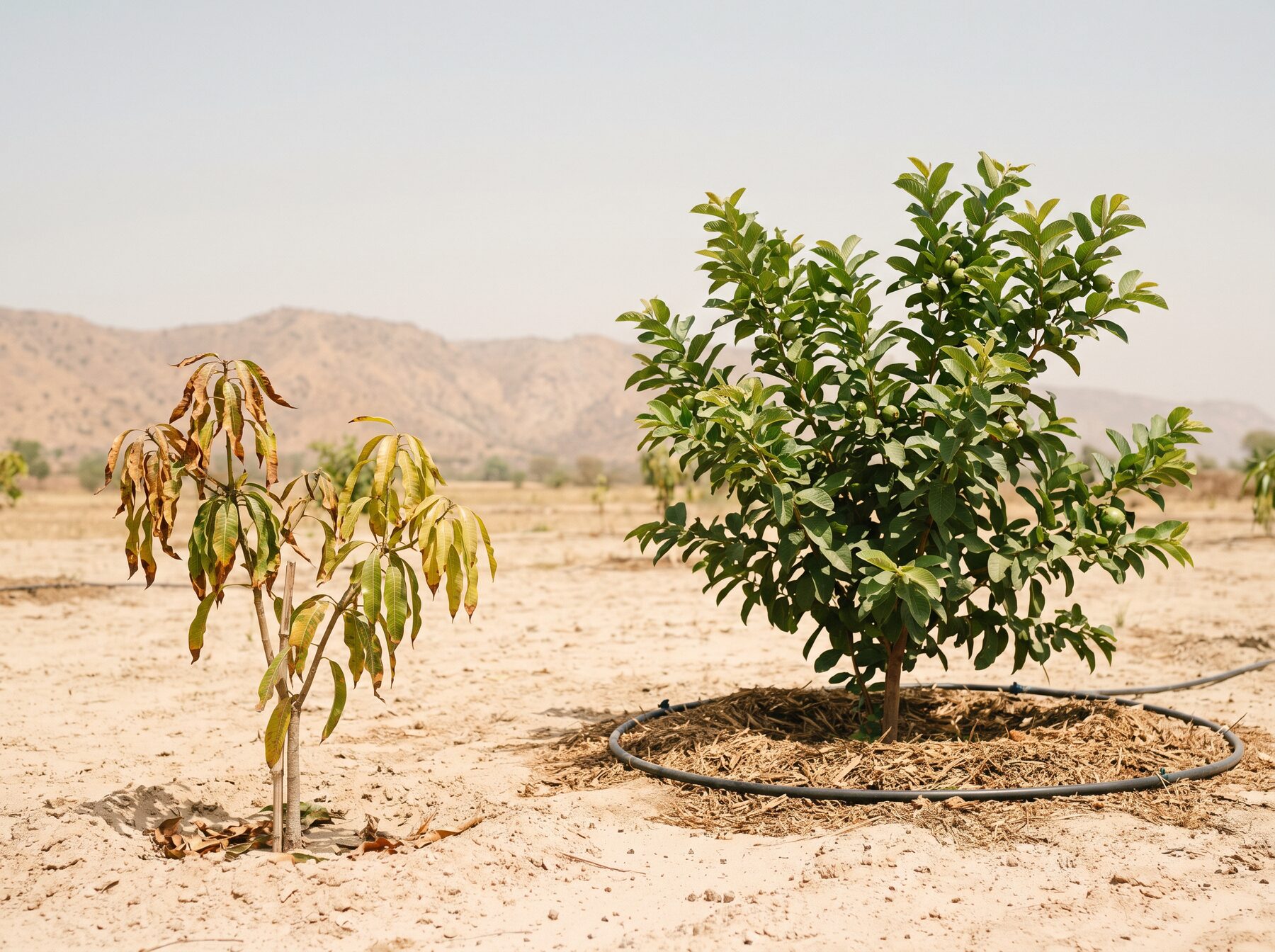
Before anything is planted, we ask whether it belongs. Our climate-fit engine scores every crop against every farm from 0 to 100, using the farm's long-run climate normals and the crop's needs across seven factors: winter lows, summer highs, rainfall, winter chill, soil pH, altitude and humidity. One bad factor drags the whole score down. We only plant a crop where it scores 85 or more.
The engine is transparent by design. On the climate atlas you can see every score and every factor behind it. It's also honest about its limits: it can't see flowering cues or frost frequency, so it's a screen that agronomists check, not a decision-maker. More on climate fit.
2. Farm OS: demand-first planning
Farm OS is our operations system. Its most important job is deciding when a crop goes ahead. Each crop on each farm has a planned capacity and a threshold: the number of plants or beds families need to reserve before we commit land, saplings and labour. Reservation requests flow into Farm OS, and when a crop crosses its threshold, it's ready for membership agreements and planting.
This is what stops UGAANA from building farms nobody asked for, and why partner farms in other regions stay at the interest stage until the demand is real. Farm OS also runs the day-to-day: tasks, inspections, water logs, the pricing model and the journal you're reading.
3. The plant passport
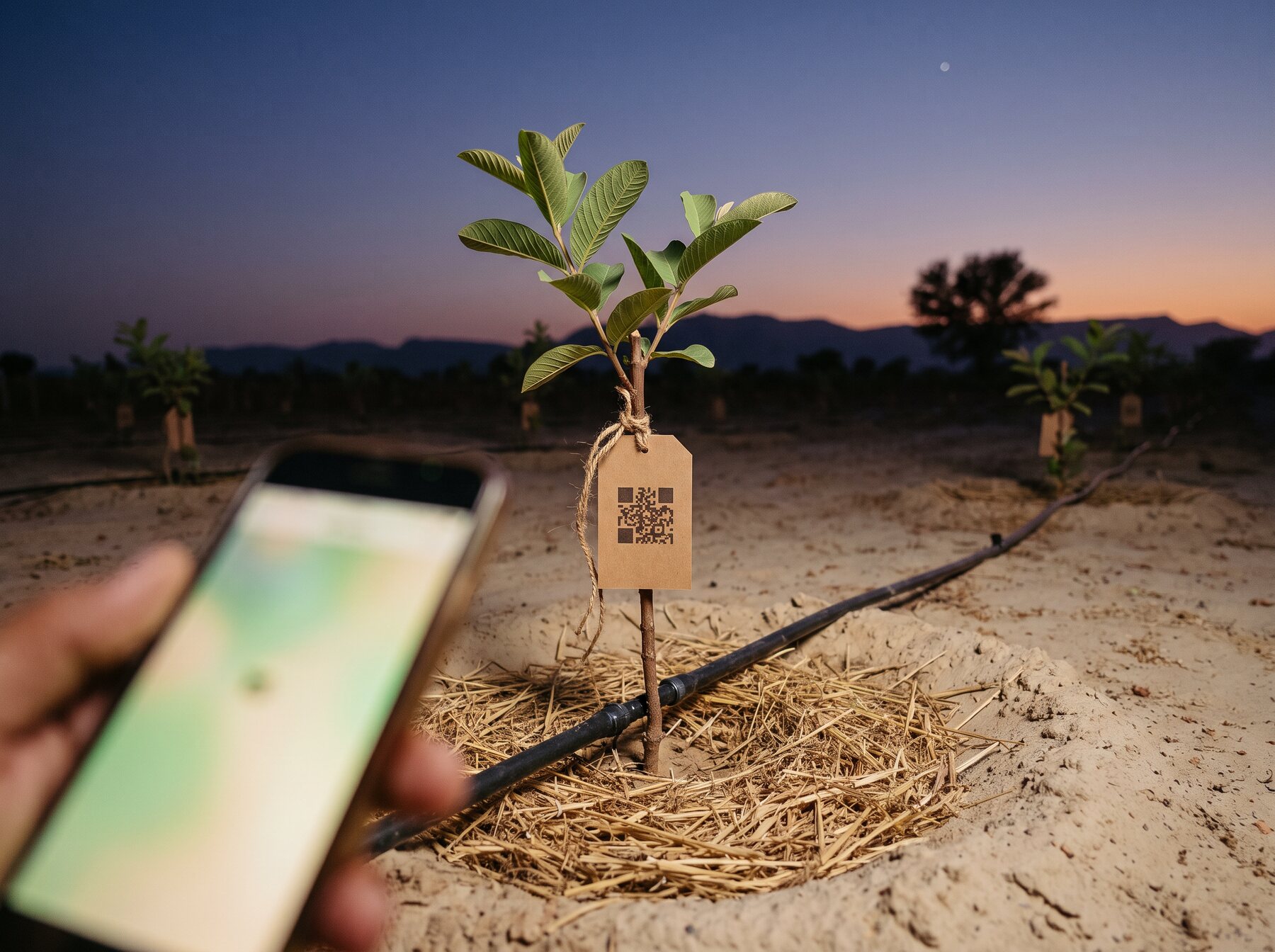
Every tree and every bed will get a durable QR tag at planting. Scan it and you'll see its plant passport: variety and rootstock, the nursery it came from, its planting date, and a timeline of everything since. Photos, growth stages, inspection notes, inputs applied and, eventually, harvest weights.
When a plant dies, and some will, its passport will say so, with the reason, and link to its replacement. The passport is the backbone of our promise to show the farm, including the parts that go wrong. Why that matters.
4. Your farm dashboard
Members will get a live dashboard for their allocation: every plant and bed on every farm, with its latest photos and stage; farm-level weather and water logs; upcoming visits; and a harvest calendar showing when each crop is expected. It's designed to be glanced at on a phone in a minute, or explored with a curious child for half an hour.
5. The harvest wallet
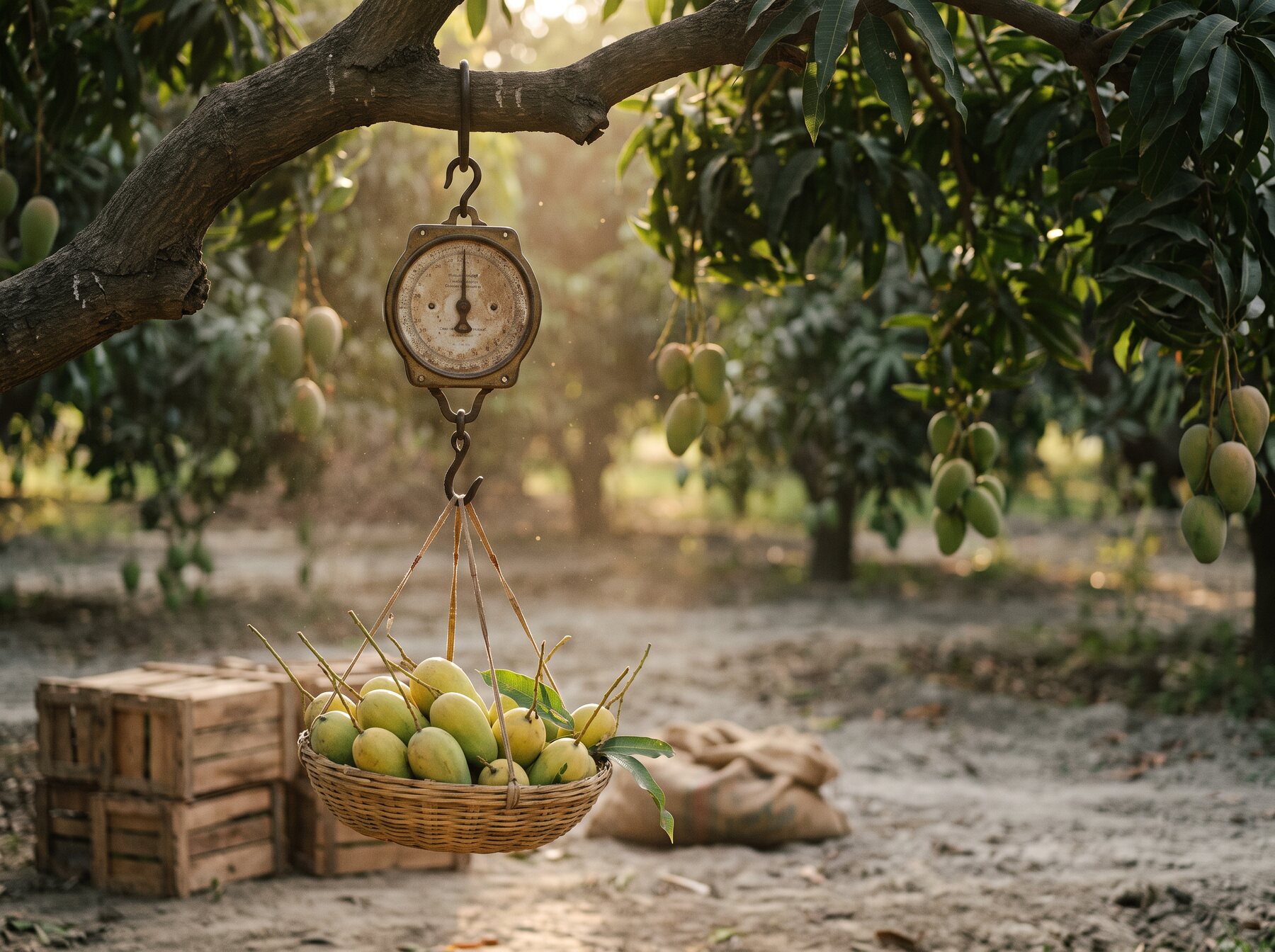
When your crops produce, the harvest lands in your harvest wallet, by weight and by crop. From there you choose what happens to it:
- Deliver it to your door, or collect it at the farm.
- Swap it for a mixed basket of what's in season.
- Donate it to a partner food bank.
- Keep it as farm credit for care fees, visits or produce.
Every movement is logged. Farm credit is for UGAANA services and produce; it isn't cash and can't be withdrawn. The harvest policy.
Technology in service of the people who farm
The best technology on a farm makes skilled people more effective; it doesn't replace them. Our farm team will use the same system on ordinary Android phones, logging an inspection with a photo and a tap, in Hindi where that helps. Good records mean the horticulturist's judgement is visible, a worker's careful pruning is noticed, and families see the real, professional work that goes into every kilo. We think farm work deserves that dignity.
The fanciest software in the world is useless if the person in the field can't use it at six in the morning in May.
What the technology will never do
- Pretend. Photos of your plants will be real photos from the farm. Illustrations on our website are labelled “Illustrative”.
- Inflate numbers. Reserved counts come from real requests and started at zero. Yields are shown as ranges, and actuals will be published.
- Sell your data. Your details are used to run your membership and nothing else. Our privacy policy.
Under it all is a deliberately lean stack: a fast static website, and Google Firebase for sign-in and data, stored in Google Cloud's Mumbai region. Small, well-tested and easy for a small team to run well.