Every drop counted: how we'll water a farm in a dry state
Rajasthan is short of water, and Jaipur's rain arrives in about three months. Here's our plan for drip, fertigation, rainwater and a 45°C May.
On this page
Water decides everything on a Rajasthan farm. Around Jaipur, the long-run average rainfall is about 630 mm a year, and most of it arrives between July and September. For the other nine months, a farm depends on groundwater, and the Central Ground Water Board classifies a large share of Rajasthan's groundwater blocks as over-exploited. A farm that grows food for families has to be careful with every litre. Not only because water costs money, but because the aquifer under the farm is shared with everyone around it.
Drip, not flood
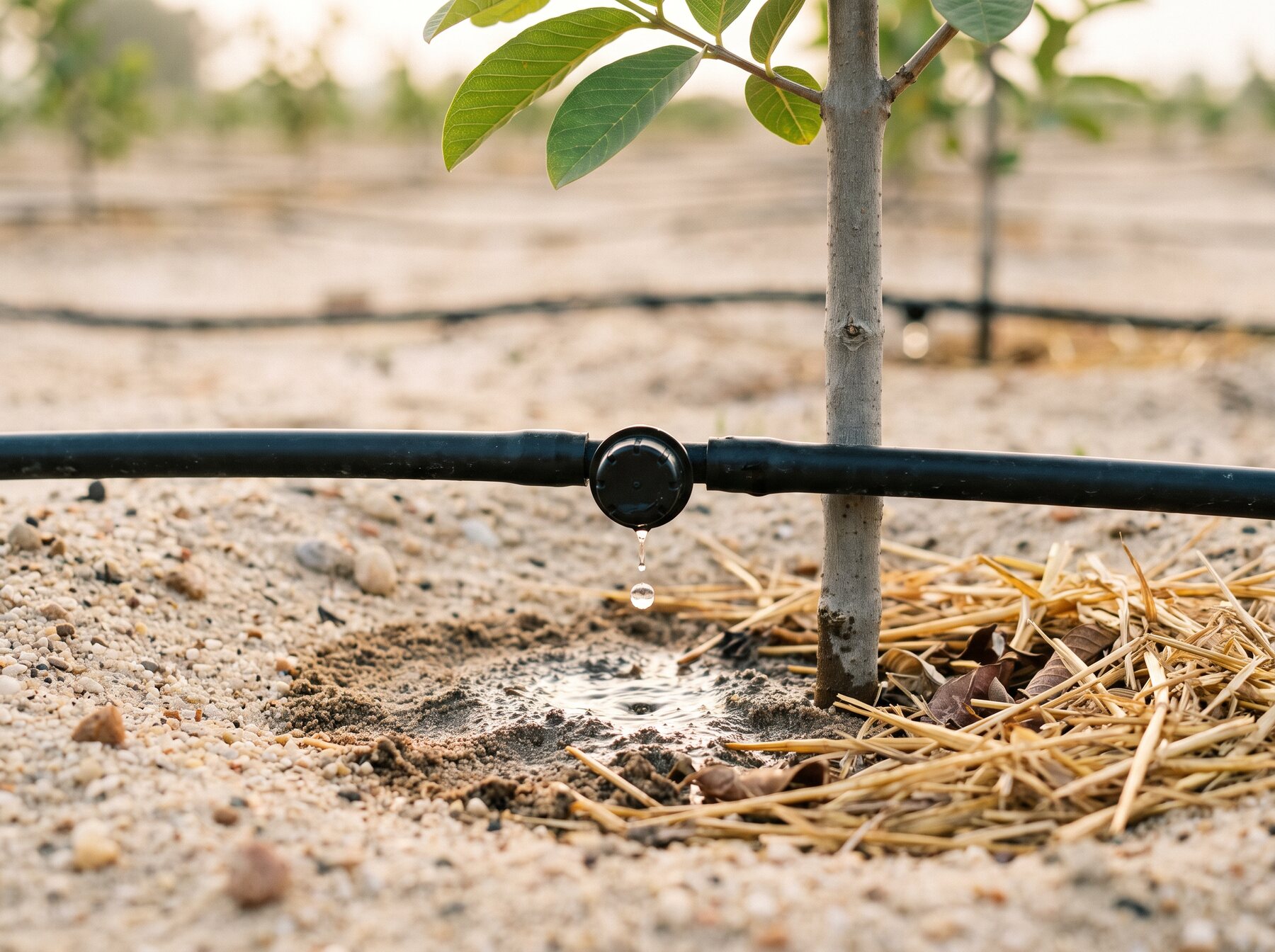
Much Indian irrigation still means flooding a field, channel by channel. It's simple, but a lot of that water evaporates or drains below the roots. Drip irrigation puts water, drop by drop, right at the root zone through pipes with small emitters. It commonly uses 30 to 50% less water than flood irrigation, keeps leaves dry (which means less disease) and lets us water each crop differently.
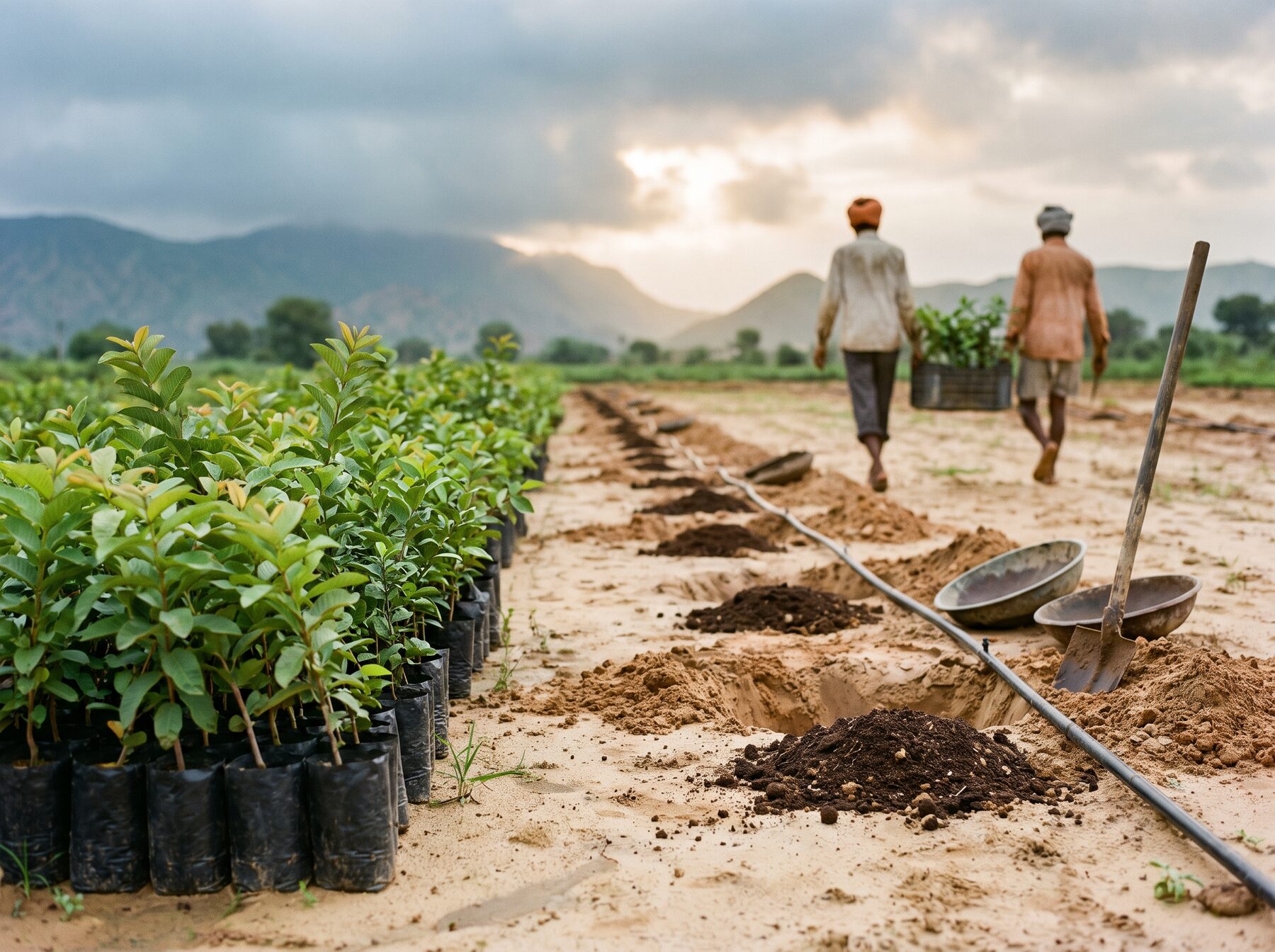
Our plan is for every tree and every bed on the Jaipur pilot to be on drip. Young trees will get one or two emitters each, moved outward as the canopy grows. Vegetable and herb beds will get inline drip laterals running under mulch.
Feeding through the drip
Fertigation means dissolving nutrients into the irrigation water in small, frequent doses, rather than scattering a sack of fertiliser twice a year. Plants take up more of what they're given, less washes away, and we can respond quickly to what the leaves are telling us. On alkaline soils like Jaipur's, it's also the easiest way to get chelated iron and zinc to citrus. Why that matters.
Testing the water before trusting it
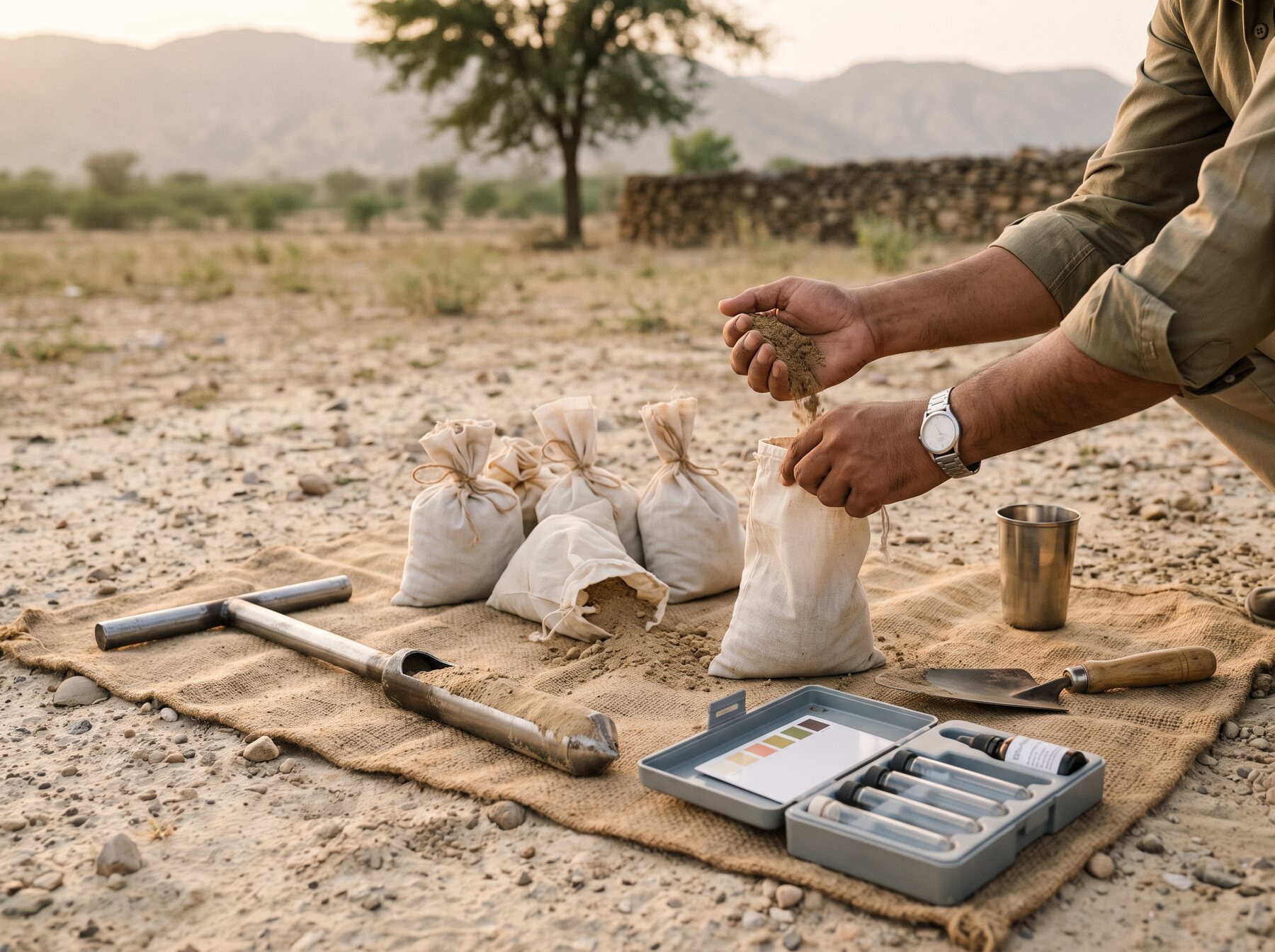
Water can look clear and still be the wrong water. Before we sign a lease, the borewell on any candidate plot will be lab-tested for three things:
- EC (salinity). Irrigation water under about 0.75 dS/m is generally safe for most crops; above about 2.25 dS/m, sensitive crops suffer.
- SAR (sodium adsorption ratio). High sodium relative to calcium and magnesium breaks down soil structure, so water stops soaking in and crusts form.
- RSC (residual sodium carbonate). Under about 1.25 meq/L is generally safe; above 2.5 is usually unsuitable without treatment.
Pomegranate tolerates some salinity; kagzi lime, and especially strawberries, much less. If the water is marginal, it changes the crop mix, or rules the plot out entirely. The full land checklist.
Catching the monsoon
Three months of rain is a short window, so we'll try to hold on to as much of it as we can. The plan includes rainwater harvesting pits and trenches along the natural slope, so monsoon runoff soaks into the ground rather than leaving the farm. Over the years, recharge like this helps the aquifer the borewell draws from. The monsoon also flushes down salts that build up in the root zone, which matters on drip-irrigated land.
In a dry state, the most important crop a farm can grow is the water table under it.
Surviving a Jaipur May
The hardest weeks for a young orchard aren't in winter. They're in May and early June, when afternoons reach 45°C, the air is bone dry and hot winds blow. A sapling planted in February has had only about three months to root. Our plan for its first summer:
- Mulch every tree basin and bed with straw or crop residue, to cut evaporation and keep roots cool.
- Shade net over young trees and herb beds in the worst weeks.
- Water at night and early in the morning, when less is lost to evaporation and plants can draw on it through the heat of the day.
- Whitewash young trunks to reduce sunscald on thin bark.
- Rest vegetable beds at the peak of May, as local farmers do, and sow again as the heat breaks.
We expect to lose some young plants anyway; every orchard does. If a plant of yours dies, we'll replace it in the next planting window at no cost, and your plant's timeline will show what happened.
What you'll see
Every irrigation cycle will be logged. In your farm dashboard you'll see the water given to your crop's block, rainfall on the farm and notes from inspections. If we over-water or under-water, that will be visible too. How the dashboard works.