How to read a soil test, and what we'll look for
A soil report is a page of numbers most people never learn to read. Here's what each line means, what's typical around Jaipur, and how the answers will shape what we plant.
On this page
When our first soil samples go to the lab, the report that comes back will look like most Indian soil reports: a table of a dozen parameters in the style of a Soil Health Card, each with a value and a rating of low, medium or high. It's worth learning to read one, whether you're joining UGAANA or growing tomatoes on a terrace.
How the samples are taken
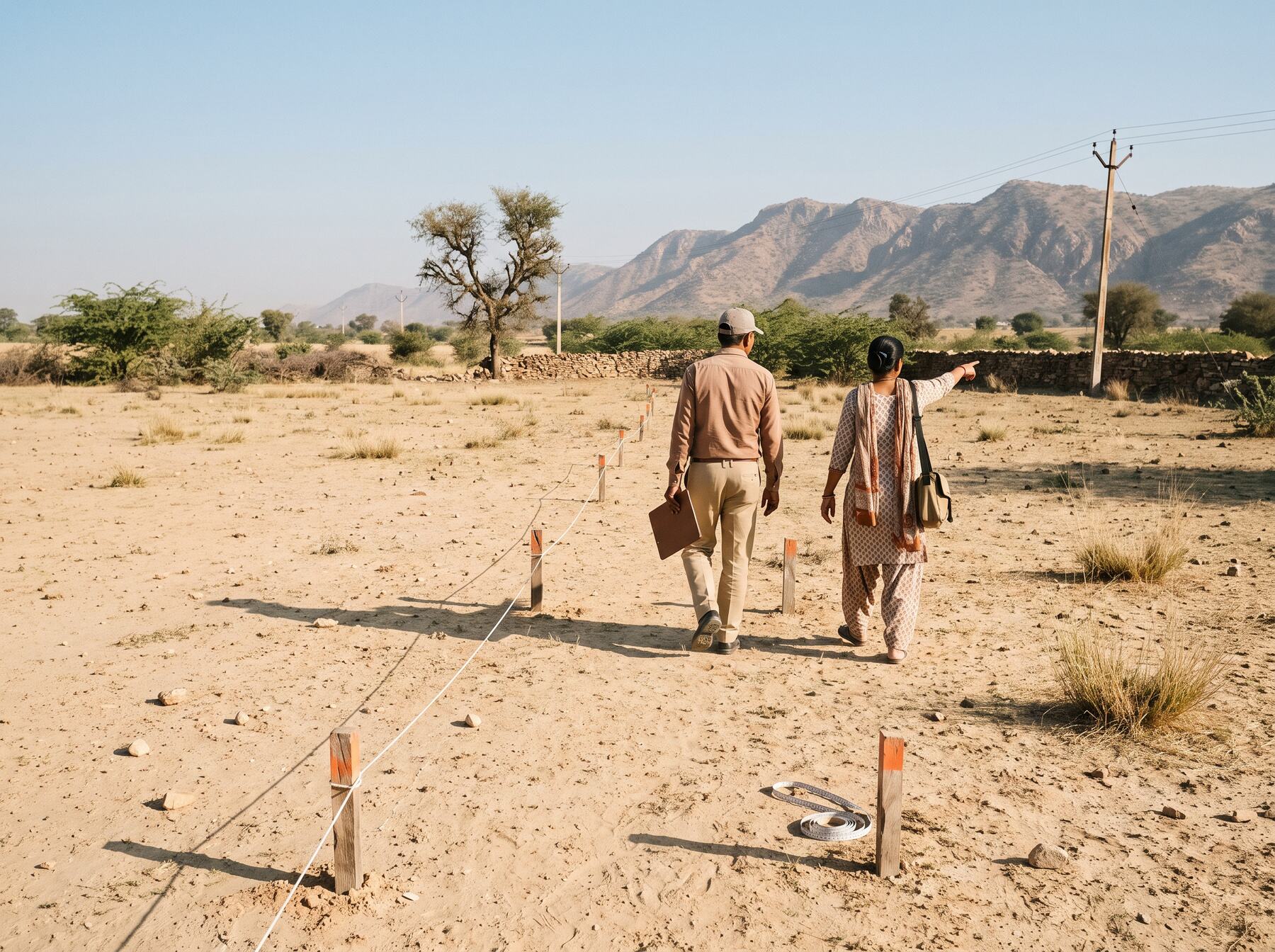
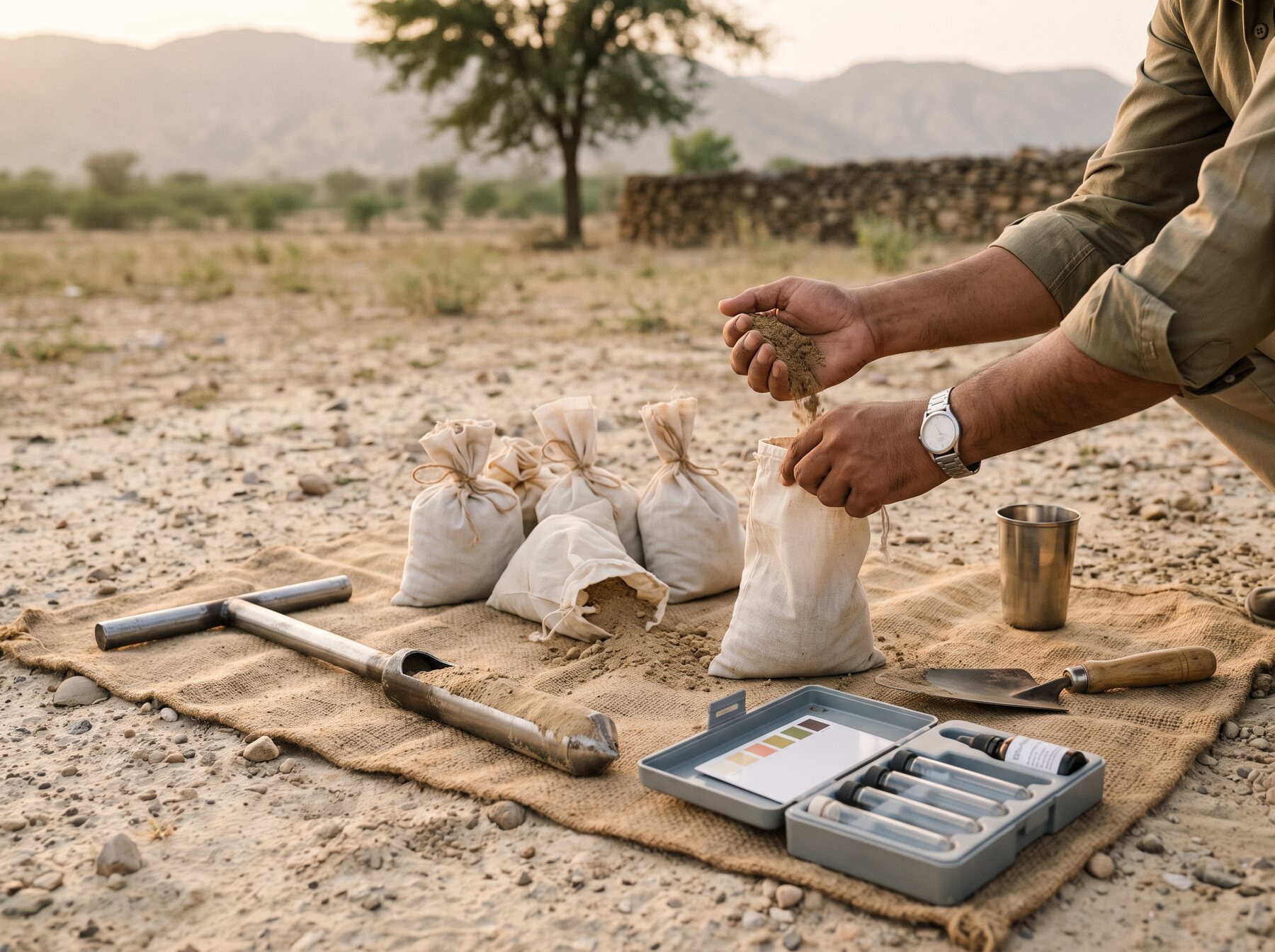
A good soil test starts in the field, not the lab. For vegetable beds, we'll sample the top 15 cm. For fruit trees, whose roots go deeper, we'll also sample at 15 to 30 cm and 30 to 60 cm. On each plot we'll collect small cores from ten to fifteen spots in a zig-zag, mix them, and send about half a kilo for analysis. For trees, we'll also dig pits about a metre deep to see what the lab can't: hard layers, stones and how quickly water drains away.
The lines that matter
pH. How acidic or alkaline the soil is, on a scale where 7 is neutral. Soils around Jaipur are typically 7.8 to 8.4. Above about 8.5, most fruit trees struggle, and you start suspecting sodium. pH tells you which nutrients are likely to be locked up: in alkaline soils, iron, zinc and manganese become hard for roots to reach.
Electrical conductivity (EC). A measure of dissolved salts. In the common 1:2 soil-to-water test, a reading under about 1 dS/m is normal for most crops. Higher values mean salt stress, which shows up as scorched leaf edges and stunted growth, especially in citrus and strawberries.
Organic carbon. The best single clue to soil life and water-holding capacity. On Soil Health Card ratings, under 0.5% is low, 0.5 to 0.75% is medium, and above 0.75% is high. Sandy soils in semi-arid Rajasthan are often in the low band. That's normal, and fixable, slowly, with compost, mulch and green manure.
Available nitrogen, phosphorus and potassium. These show how much of each major nutrient plants can use now. For nitrogen, under 280 kg per hectare is rated low and above 560 is high. Many Rajasthan soils are low in nitrogen, but only a test tells you about a particular field.
Micronutrients. Zinc, iron, manganese, copper and boron. The usual lab method (DTPA extraction) has widely used critical levels of about 0.6 ppm for zinc and 4.5 ppm for iron; below those, deficiency is likely. On alkaline soils, iron and zinc are the ones we'll watch most closely, especially for kagzi lime.
Calcium carbonate. Not on every report, but important here. Free lime makes soil fizz when a drop of acid touches it, and a lot of it makes iron deficiency worse. A hard kankar layer near the surface can also block roots, which is why the pit matters as much as the lab.
How the results will change the plan
A soil test isn't a pass or a fail. It's a set of instructions. Here's how the most likely findings would shape our choices:
- High pH, low iron: kagzi lime on Rangpur lime rootstock, which copes better with alkalinity, with chelated iron through the drip. Guava, pomegranate and amla tolerate these soils better than most fruit.
- Low organic carbon: well-rotted farmyard manure or compost in every planting pit, mulch on every bed, and a green manure crop in the first monsoon where beds allow.
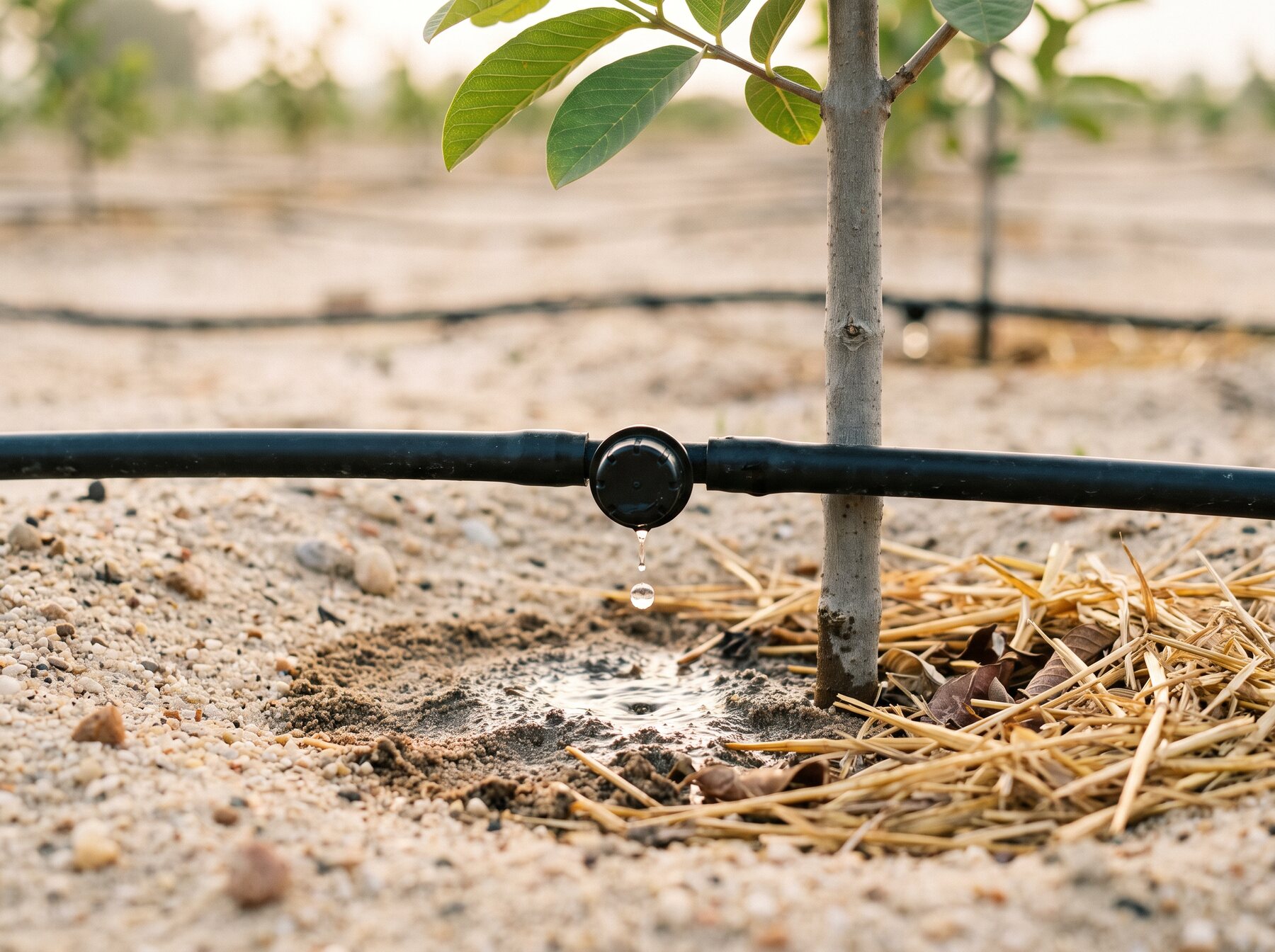
- High salts in the soil or water: a crop mix that leans away from salt-sensitive crops, drip to keep the root zone moist, and the monsoon to flush salts down.
- A shallow hard layer: deeper pits, breaking the layer before planting, or moving the trees to a different block.
A soil test isn't a verdict on the land. It's the first page of the farm's instruction manual.
Why we'll publish ours
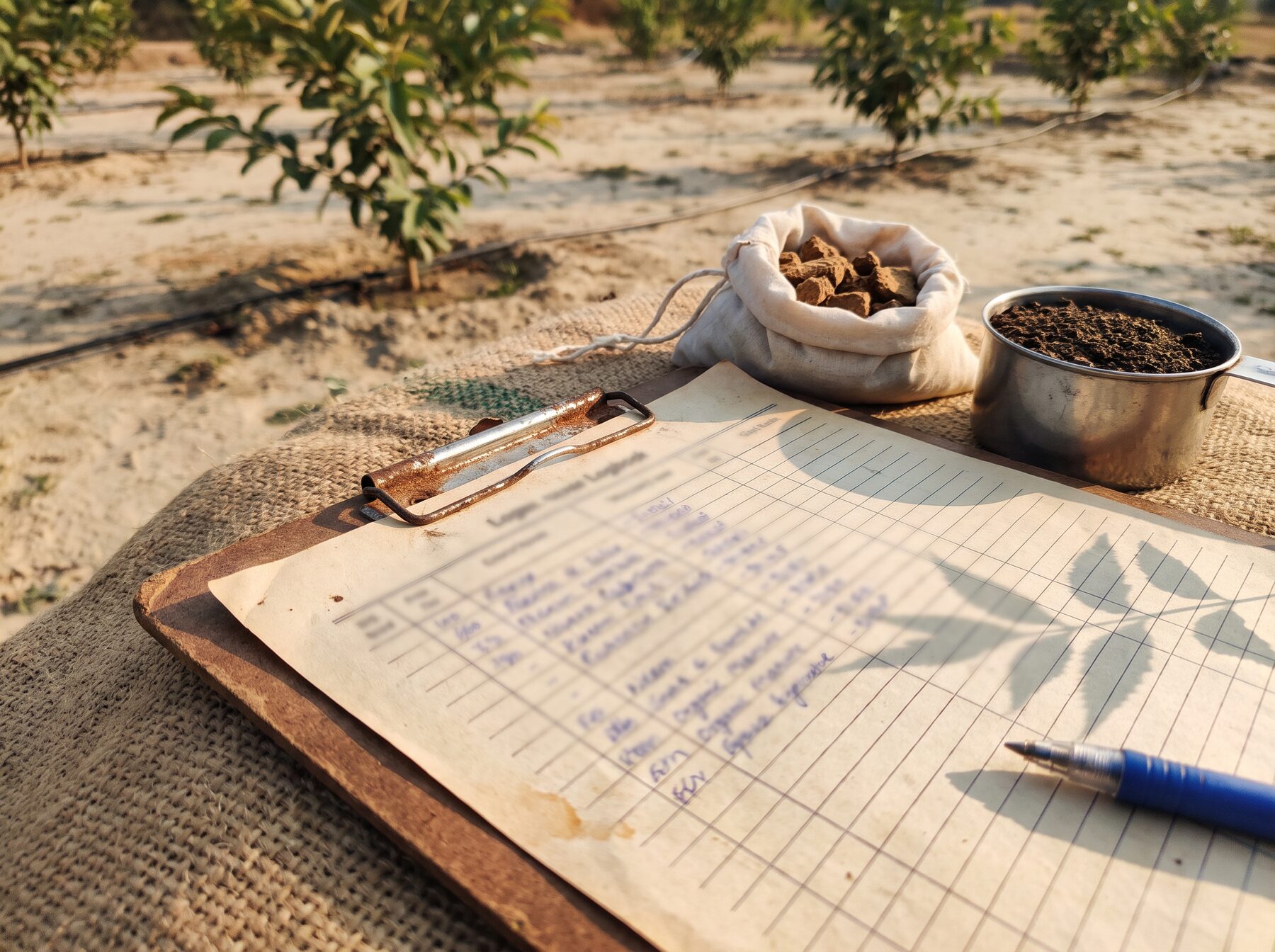
Most farms never share their soil report. We'll post ours in full, with the lab's name and the sampling date, and explain what we changed because of it. We'll test again every year, so you can watch whether organic carbon actually rises. If it doesn't, you'll see that too.
If you'd like to understand the region first, the Jaipur farm page sets out its climate and what suits it, and how we'll choose land explains the rest of the checklist, including the water tests.