Why we're building UGAANA
Most city families want food they can trace and a farm their children can walk through. Almost none of them can buy farmland, farm it and keep it running. UGAANA is our attempt to close that gap.
On this page
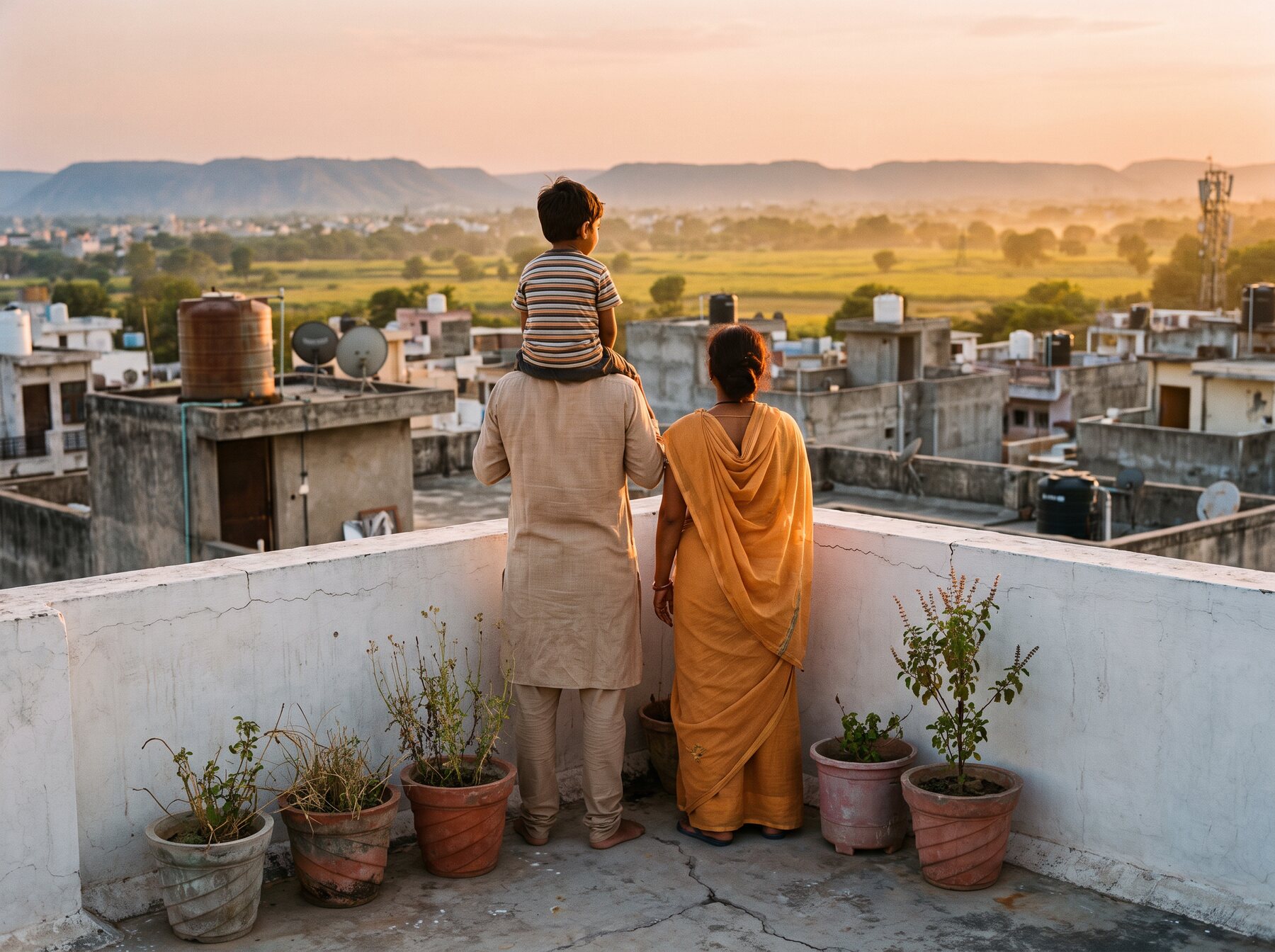
Ask a family in Jaipur, Pune or Gurugram where last night's dinner was grown and you'll usually get a shrug. Not because they don't care, but because the chain between a field and a kitchen in India has become long, anonymous and mostly invisible. Vegetables pass from a farmer to a commission agent, a mandi, a wholesaler and a retailer before they reach you, and at every step the story of where they grew is lost.
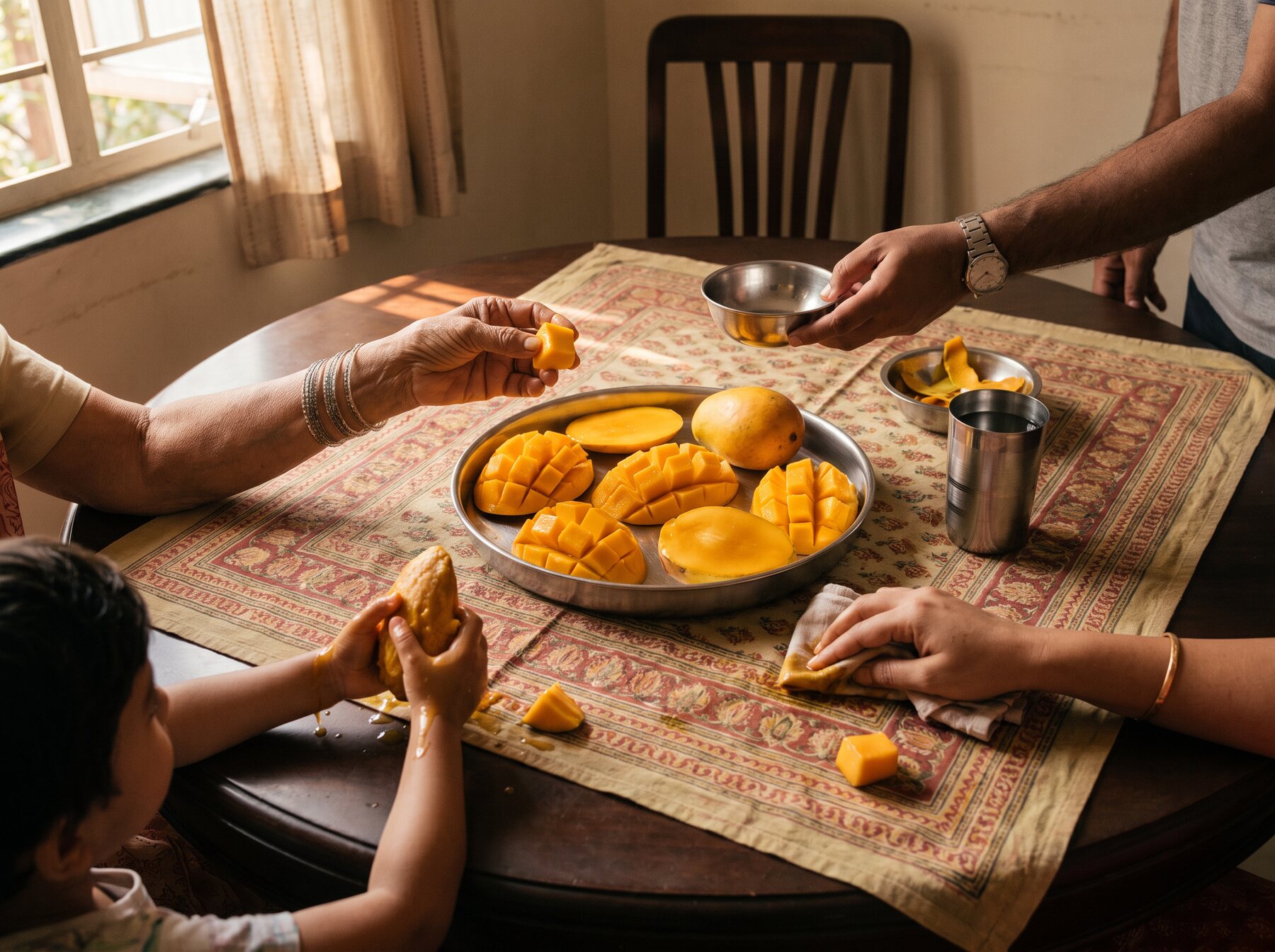
We started UGAANA because we kept meeting families who wanted that story back. They wanted fruit they could trace to a row of trees. They wanted their children to know that a guava comes from a tree that takes nearly two years to bear, not from a plastic tray. And a surprising number of them had quietly looked into buying a small piece of farmland, and walked away.
The farmland dream, and why it usually stops
The dream is simple: a couple of bighas outside the city, some fruit trees, a vegetable patch, weekends in the open air. The reality is harder. In several Indian states, only people who are already agriculturists can buy agricultural land. Where you can buy, you face title checks across decades of land records, conversion rules if you want to build even a shed, a borewell that may or may not yield, and labour you have to manage from a city two hours away.
Then there's the farming itself. A pomegranate orchard needs its flowering timed to the season. Guava needs pruning to fruit well. Vegetables need sowing in the right window and someone watching for pests every week. Many families who do buy land end up with a fenced plot, a caretaker's salary and very little food.
Most people didn't want to own a farm. They wanted the food, the connection and the weekends, without the paperwork and the labour.
What UGAANA does instead
UGAANA is an agri-tech platform for a managed agricultural service. You choose what you'd like grown, how much of it, and on which farm. Our farm team grows it for you on professionally managed land, and you receive what your plants actually produce. You never buy land, and you don't own the trees or the plot. What you get is the growing, the tracing and the harvest.
Three ideas shape everything we build:
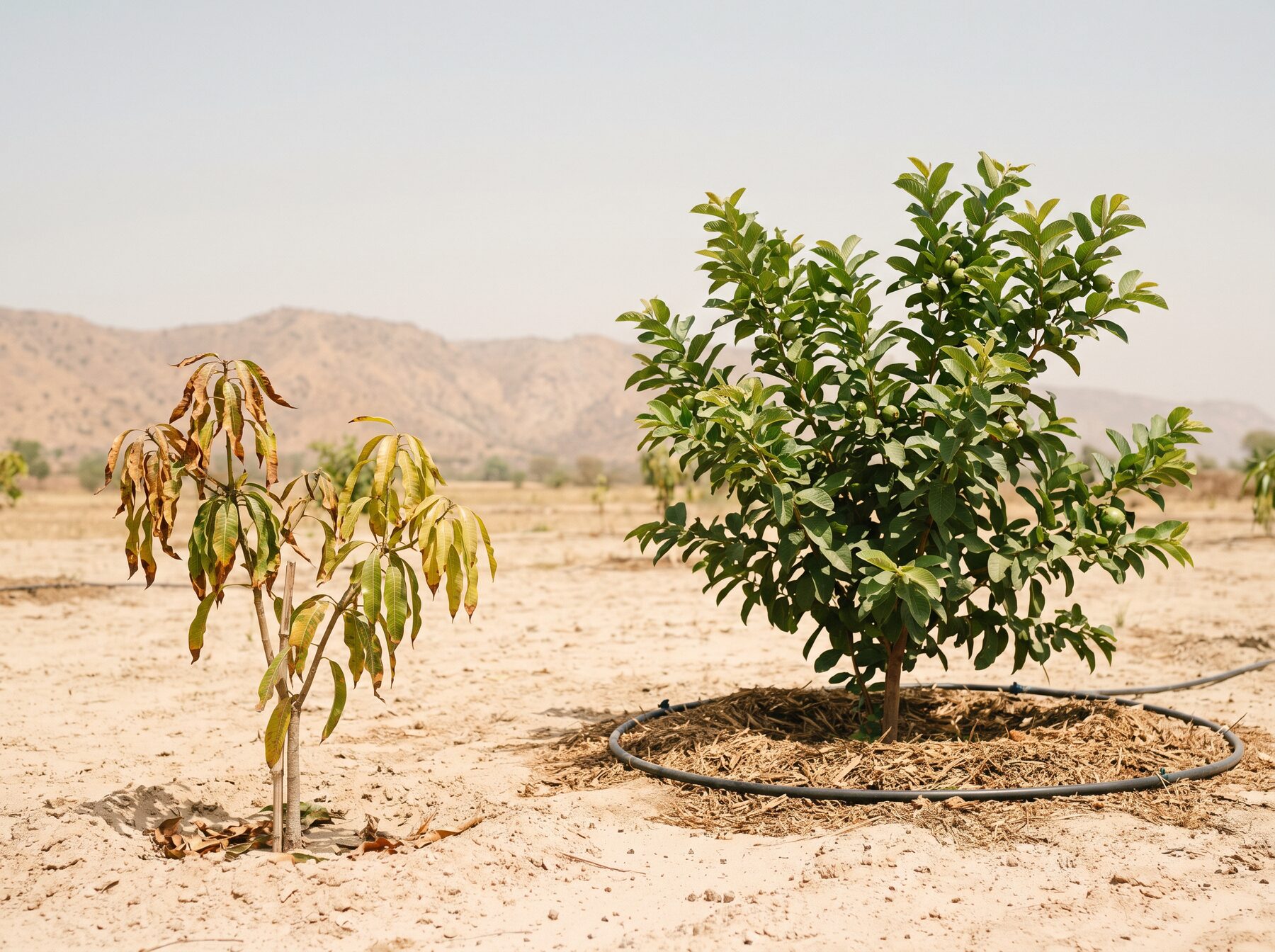
- Each crop where its climate belongs. Guava, pomegranate, kagzi lime and amla suit Jaipur's dry heat and alkaline soils. Alphonso belongs on the Konkan coast, apples in Himalayan cold, coffee in Coorg's shade. We only plant a crop where it's a native fit. Why that matters.
- Demand first. A crop is planted only once enough families have reserved it. We don't build capacity and then hunt for customers.
- Honest numbers. Every crop shows a published reference yield, our planning range and a conservative figure. After each harvest we'll publish the actual. How we talk about harvests.
A country that grows extraordinary food
India is one of the great farming countries of the world. It's the largest producer of mangoes, bananas and milk, and among the largest of guava, pomegranate and much else. Its regions have given the world Alphonso and Dasheri, Nagpur oranges and Coorg arabica, each now protected by a Geographical Indication. Behind every one of them are generations of farmers who know their land intimately. Yet for many city families, that heritage has become something they read about rather than something they belong to.
We want UGAANA to change that relationship. Not by turning farmland into something to own or trade, but by giving families a place in it: a row of trees they can visit, a harvest they can trace, and a farm team whose skilled, professional work they can see and respect. A family farm has always been about belonging and continuity more than wealth. That's the part we want to bring back.
Where we are today
We want to be precise here, because trust is the whole product. As of September 2026, no land is leased, nothing is planted and no soil test has been done on a UGAANA plot. We're shortlisting land within an hour of Jaipur for our first farm, the pilot we'll operate ourselves. Every candidate plot will be soil- and water-tested before we sign anything. Our target planting day is 13 February 2027.
The other regions on our website, from Ratnagiri to Coorg, are taking interest only. We'll contract a partner farm in a region once enough families ask for it, and not before. Until then, those pages describe what would grow there and why, not what is already growing.
Why technology, and why now
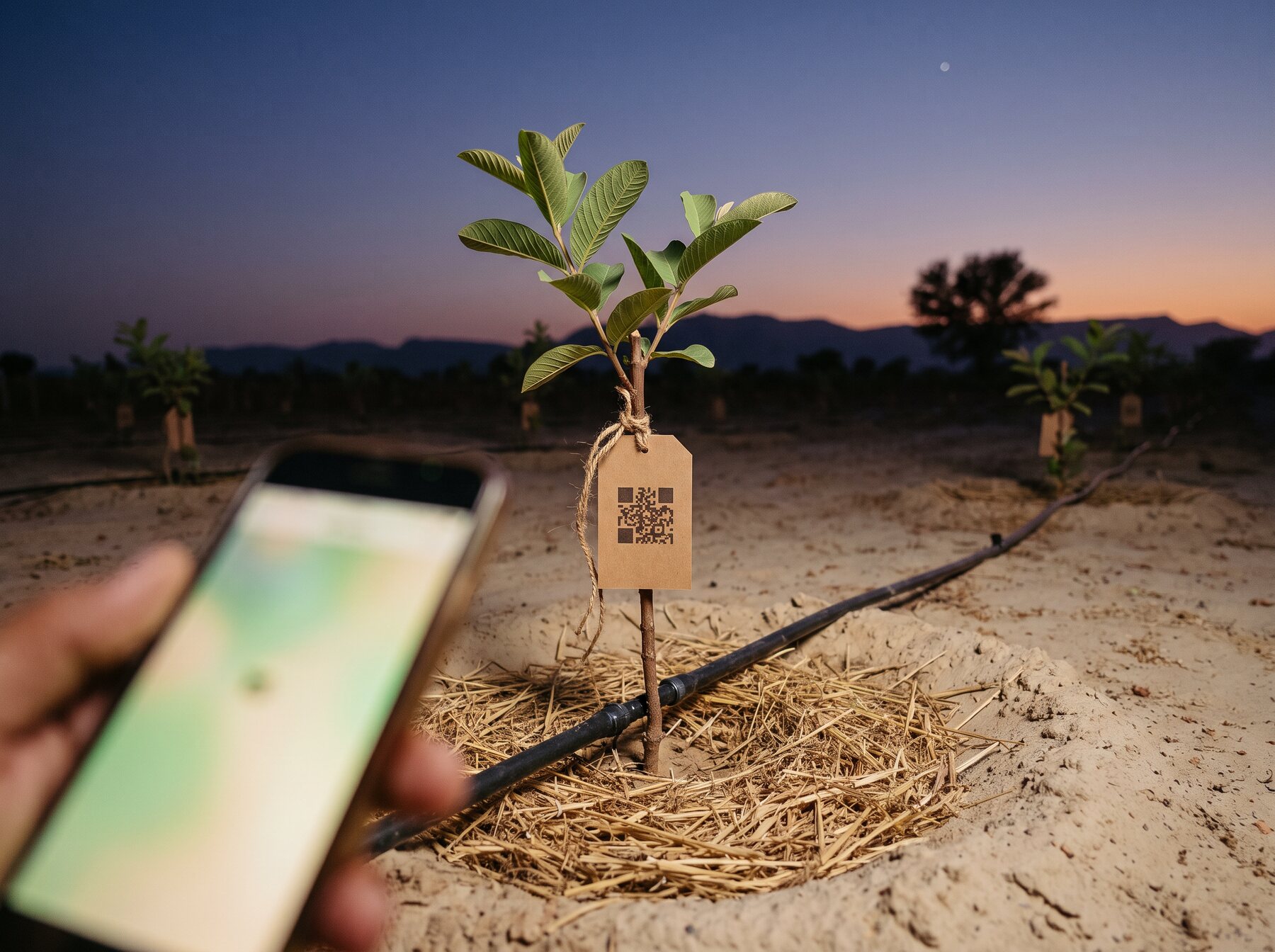
A farm that grows food for hundreds of families has to be run like a well-kept ledger. Every plant needs an identity, a planting date, a record of inspections and a harvest weight. That's what our software is for. Each plant will get a QR-tagged plant passport, each family a live dashboard, and each crop a transparent climate-fit score. The same system decides when a crop has enough families to go ahead. How the technology works.
None of this would have been practical ten years ago. Today, affordable smartphones, mobile data in rural Rajasthan, drip and fertigation kits, and cloud software mean a small, skilled team can run a farm transparently for families who live far away.
What we hope UGAANA becomes
We hope that in a few years a child in Jaipur can point at a guava and say which row it came from. That a family in Mumbai can follow a Dasheri tree in Malihabad through flowering, fruit set and harvest. And that we're known less for what we say than for what we publish: the actual weights, the plants we lost, and what we changed because of it.
If that sounds like something your family would like, the first step costs nothing. Build a farm on paper, see what it would cost and what it could produce, and send us a free request. We'll call you, answer every question, and only ask for anything when your crop is genuinely close to going ahead.