Three numbers, not one: how we talk about harvests
Every crop on UGAANA shows a reference yield, a planning range and a conservative figure. Here's why a single number would mislead you, and what happens when a season goes wrong.
On this page
The easiest way to sell a fruit tree is to quote the best number you can find. “A mature Alphonso gives 80 kg a year.” It isn't false, exactly. Some trees, in some years, in some orchards, do. But it's the kind of number that sets a family up for disappointment, and we don't want to build UGAANA on disappointment.
So every crop on our site carries three numbers, not one. And after every harvest, a fourth.
The three numbers
Reference yield. What published research or official data says a mature, well-managed plant or bed can produce under good conditions. For our planned guava meadow orchard, that's 10 to 12 kg per plant, from ICAR-CISH's close-spaced system. For Bhagwa pomegranate at the recommended spacing, 20 to 30 kg per plant. We cite the source next to each figure.
Planning range. What we actually plan around for your plants in their early bearing years, on our farm, allowing for realistic losses. It's always lower than the reference. For guava, 5 to 10 kg per plant. For pomegranate, 8 to 18 kg.
Conservative figure. What a poor but not disastrous year could look like: a hot spring, a pest outbreak caught late, a heavy monsoon. For guava, 3 kg per plant. For pomegranate, 5 kg.
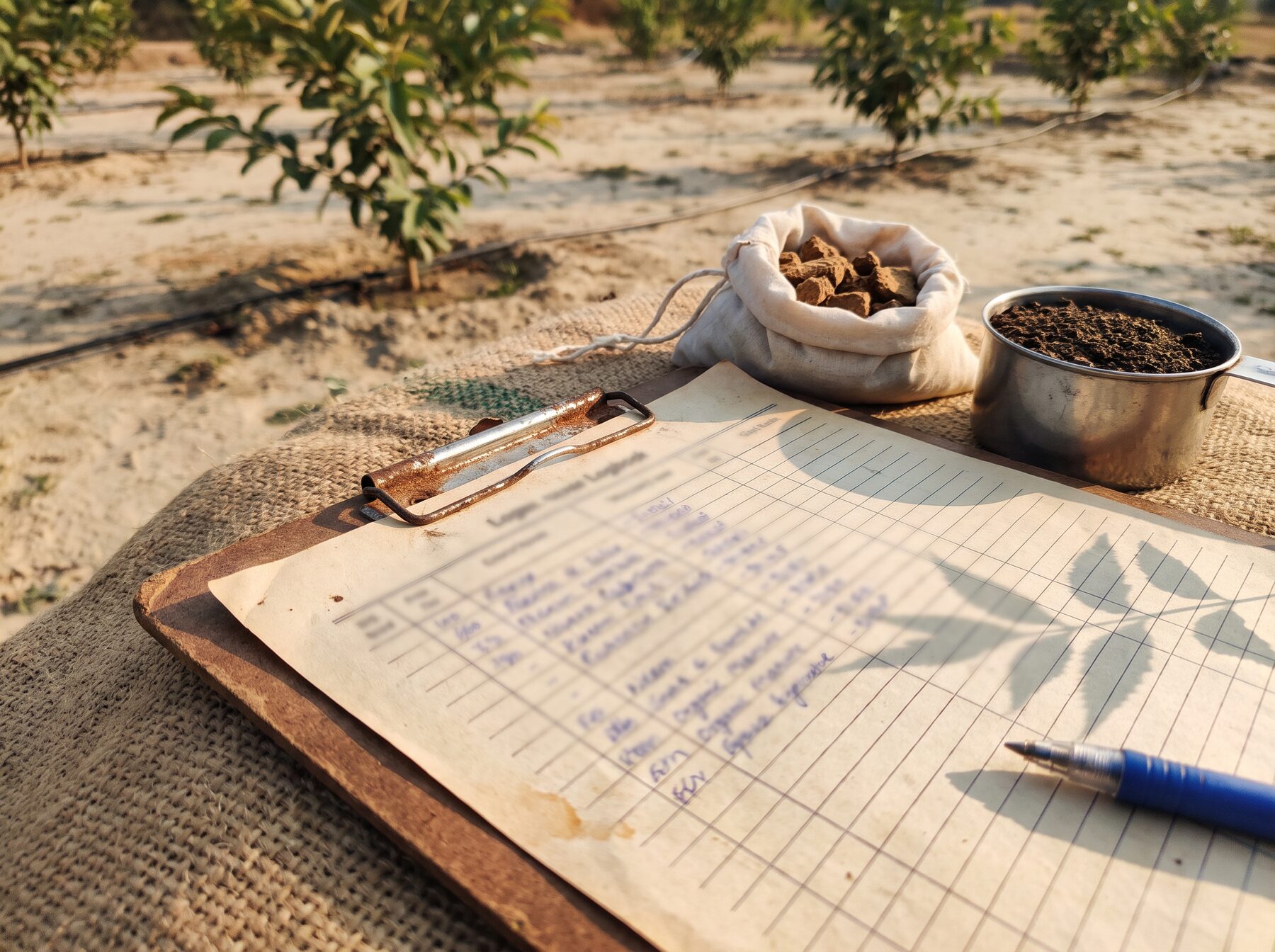
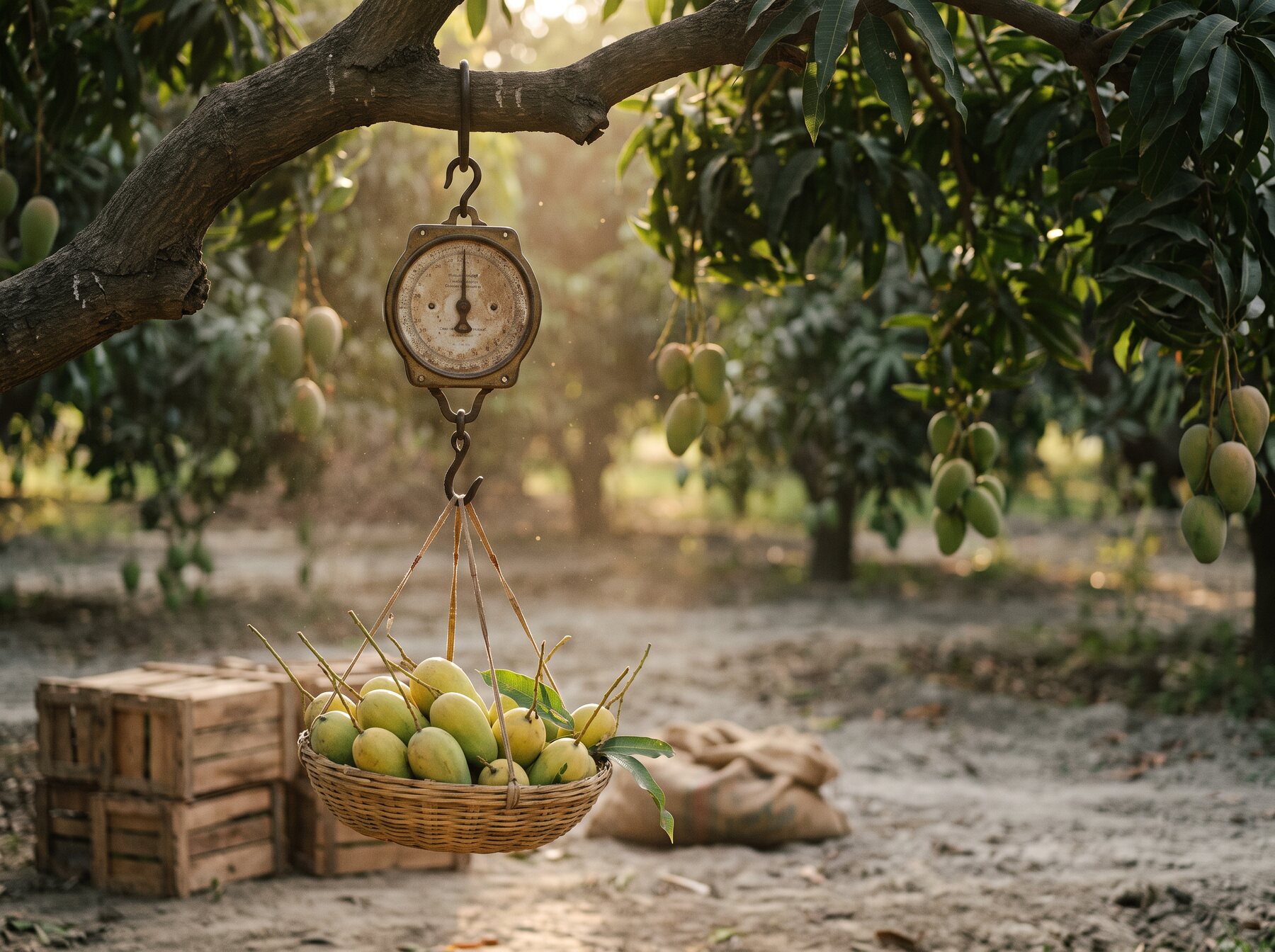
Actual. What your plants really produced, weighed at harvest and published crop by crop, every season.
Why the gap is so wide
Farming is variable in ways most products aren't. The research data shows it: ICAR lists its own mango varieties at quite different yields, with CISH Ambika at around 80 to 90 kg per plant and CISH Arunika at 60 to 70 kg under specified conditions. And a single variety swings from year to year:
- Alternate bearing. Mango, especially Alphonso, often crops heavily one year and lightly the next.
- Weather at the wrong moment. Unseasonal rain at flowering, a hailstorm in spring or a heatwave during fruit set can cut a harvest in days.
- Young trees. A tree in its first bearing years produces a fraction of what a mature one does. Our planning ranges are for those early years, which is why they sit well below the reference.
- Pests and disease. Fruit fly in guava's monsoon flush, or bacterial blight on pomegranate in a humid spell.
A single number hides all of that. Three numbers show you the shape of the risk before you commit to anything.
If we ever have to choose between a number that sells and a number that's true, we'll publish the true one.
When a season goes wrong
Honest numbers are only half of it. The other half is what happens when a harvest falls short.
Harvest protection. If a documented farm-level failure (a hailstorm, a disease outbreak, an irrigation failure on our side) leaves your crop below 50% of its planning range, harvest protection applies. You'll get replacement produce where it's available, farm credit, or replanting, as your membership agreement sets out. It's in kind, not cash, and it's documented: you'll see the inspection notes and photos that show what happened. Read the harvest policy.
Plant replacement. If one of your plants dies, we replace it at no cost in the next planting window, and its plant passport shows the whole story.
What it isn't. Harvest protection isn't a promise of a fixed quantity of fruit. A normal poor year, within the conservative range, is part of farming, which is exactly why we show the conservative figure up front.
Why we'll publish the actual
Every harvest, for every crop, we'll publish the actual weight per plant or per bed next to the planning range. Some years it will beat the range. Some years it won't. Over time, those actuals will become the most useful thing we produce: a public record of what these crops really do on these farms. We'll use them to adjust our planning ranges, up or down, for future families.
It also keeps us honest in a way nothing else can. A planning range that's missed three years running is a range we got wrong, and you'll be able to see that we changed it. We'd rather be corrected in public by our own data than be quietly optimistic in private.
You can see all three numbers for every crop on its page. Start with guava, the backbone of the Jaipur pilot, or read why UGAANA is a farm, not a financial product.